
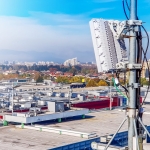





The global 5G Smart Antenna Market is experiencing substantial growth as the demand for faster, more reliable, and high-capacity wireless communication continues to rise worldwide. Valued at US$ 6.8 Bn in 2022, the market is projected to reach US$ 16.7 Bn by the end of 2031, expanding at a CAGR of 10.8% from 2023 to 2031.
Rapid deployment of 5G infrastructure, increasing smartphone penetration, and growing demand for autonomous vehicles are among the major factors driving market expansion. Smart antenna technologies are becoming critical components of modern telecommunications networks, helping operators improve coverage, capacity, and overall network performance.
Understanding the Importance of 5G Smart Antennas
A 5G smart antenna is an advanced wireless communication system that uses intelligent signal processing techniques to optimize signal transmission and reception. Unlike conventional antennas, smart antennas can dynamically adjust their radiation patterns, direct signals toward intended users, and minimize interference from unwanted sources.
Technologies such as beamforming and Massive Multiple Input Multiple Output (Massive MIMO) have become essential in 5G deployments. These technologies enable network providers to deliver higher data rates, lower latency, and enhanced connectivity experiences while efficiently managing growing network traffic.
As the world moves toward increasingly connected environments, smart antennas are playing a vital role in unlocking the full potential of 5G networks.
Growing Demand for Autonomous Vehicles Fuels Market Growth
One of the strongest growth drivers for the 5G smart antenna market is the increasing adoption of autonomous and connected vehicles. Self-driving vehicles rely heavily on real-time communication between vehicles, road infrastructure, pedestrians, and cloud-based systems.
5G smart antennas facilitate Vehicle-to-Everything (V2X) communication by ensuring low-latency, high-speed, and highly reliable connectivity. These capabilities enable vehicles to exchange critical information related to traffic conditions, accident warnings, road hazards, and navigation updates.
The autonomous vehicle industry continues to gain momentum globally, creating strong demand for advanced communication technologies. As vehicle manufacturers integrate more connected and autonomous features into their products, the need for high-performance 5G smart antennas is expected to increase significantly throughout the forecast period.
Rising Data Consumption Accelerates Adoption
The explosive growth of digital content consumption is another major factor contributing to market expansion. Consumers and businesses are increasingly relying on bandwidth-intensive applications such as ultra-high-definition video streaming, cloud computing, virtual reality (VR), augmented reality (AR), and online gaming.
These applications require high-speed data transmission and seamless connectivity, which can only be effectively supported by advanced 5G networks equipped with smart antenna systems.
Smart antennas enhance spectral efficiency, improve network capacity, and deliver faster download and upload speeds. By optimizing signal quality and reducing network congestion, these antennas help telecommunication operators meet the growing expectations of modern users.
As global mobile data traffic continues to surge, demand for 5G smart antenna solutions is expected to rise steadily.
Get Sample PDF Copy: https://www.transparencymarketresearch.com/sample/sample.php?flag=S&rep_id=76435
Massive MIMO Technology Gains Strong Traction
Among various technologies used in smart antennas, Multiple Input Multiple Output (MIMO) remains the dominant segment. MIMO technology accounted for the largest share of the market in 2022 and is expected to maintain its leadership position during the forecast period.
MIMO utilizes multiple transmitting and receiving antennas to simultaneously send and receive data streams. This significantly increases network throughput, improves coverage, and enhances overall communication reliability.
In 5G networks, Massive MIMO systems support a large number of antenna elements, enabling operators to serve more users simultaneously while maintaining superior network performance. As telecom providers continue expanding their 5G infrastructure, the adoption of Massive MIMO-enabled smart antennas is expected to grow rapidly.
Expanding Applications Across Industries
The adoption of 5G smart antennas extends far beyond telecommunications. Various industries are increasingly leveraging 5G connectivity to support digital transformation initiatives.
In smart cities, smart antennas enhance connectivity for Internet of Things (IoT) devices, intelligent transportation systems, public safety networks, and environmental monitoring applications. In manufacturing environments, they enable real-time communication between machines, robots, and automated systems, improving operational efficiency and productivity.
Healthcare, logistics, retail, and energy sectors are also investing in advanced wireless communication infrastructure to support emerging technologies and data-driven operations. This broadening application landscape continues to create new growth opportunities for market participants.
Asia Pacific Leads Global Market Growth
Asia Pacific emerged as the largest regional market in 2022, accounting for over 40% of global revenue. Countries such as China, Japan, South Korea, and India are aggressively expanding their 5G infrastructure to support growing mobile internet usage and digital transformation initiatives.
Government support, increasing smartphone adoption, and substantial investments from telecommunication operators are driving the deployment of smart antenna systems across the region.
North America also represents a significant growth market due to strong investments in next-generation wireless technologies. Telecom companies and equipment manufacturers in the region are actively developing advanced antenna solutions to support expanding 5G networks and emerging connected applications.
Competitive Landscape and Future Outlook
The global 5G smart antenna market remains highly competitive and fragmented, with several established technology companies competing to strengthen their market positions through innovation, strategic partnerships, and product development.
Leading companies operating in the market include Airspan Networks Inc., Ericsson AB, HARMAN International, Huawei Technologies Co., Ltd., Mitsubishi Electric Corporation, NEC Corporation, Nokia Corporation, Qualcomm Technologies, Inc., Samsung Electronics Co., Ltd., and ZTE Corporation.
As demand for high-speed connectivity, autonomous mobility, smart city infrastructure, and industrial automation continues to grow, the importance of 5G smart antennas will increase significantly. Ongoing advancements in beamforming, Massive MIMO, and intelligent antenna technologies are expected to shape the future of wireless communication, creating substantial opportunities for market participants through 2031.
Contact:
Abhishek Budholiya
Transparency Market Research Inc.
State Tower, 90 State Street, Suite 700,
Albany NY – 12207, United States
Tel: +1-518-618-1030
USA – Canada Toll Free: 866-552-3453
Website: https://www.transparencymarketresearch.com