
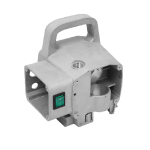


Most aluminum sprayer casing products are made from ADC12 alloy, which allows complex shapes to be cast in a single piece while resisting corrosion and heat. After die casting, finishing steps such as polishing, CNC machining, and surface treatments like powder coating enhance durability and ensure the casing meets precise dimensional requirements. Porosity control and accurate tolerances are critical, as they directly affect assembly, sealing, and structural integrity.
The lightweight yet strong properties of an aluminum sprayer casing make it ideal for portable industrial equipment. Compared with steel, aluminum balances durability with manageable weight, reducing operator fatigue while protecting critical internal mechanisms. Quality casings undergo careful inspection for surface finish, dimensional accuracy, and mechanical strength, ensuring the part performs under continuous stress.
In industrial settings, the long-term benefits are clear. Using an aluminum sprayer casing reduces downtime caused by cracked or warped housings, improves productivity, and lowers maintenance costs. While more expensive upfront than plastic alternatives, the investment pays off through extended equipment life and reliable performance in demanding environments. Manufacturers benefit from fewer warranty claims and satisfied customers by specifying durable aluminum casings designed for their application.