
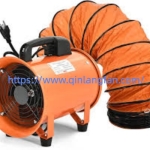

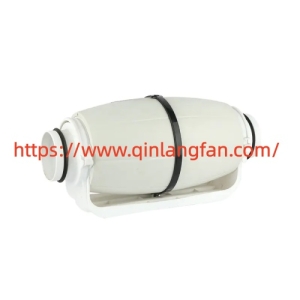
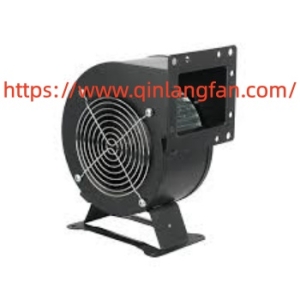
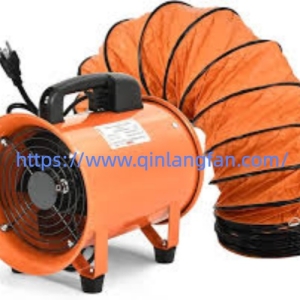
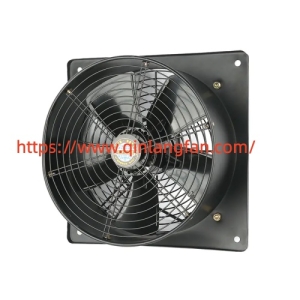
Portable Axial Fan selection should begin with the actual working condition rather than a model number on a product list. Buyers need to consider where the equipment will operate, how much air needs to move, how far that air must travel, and whether anything will restrict the flow. Qinlang develops ventilation equipment for industrial and commercial applications, with different configurations available for cooling and air movement.
The first thing to check is airflow demand.
A large room may require a different air volume from a small workshop or enclosed work area. If the equipment is being used for cooling, the position of workers, machines, walls, doors, and other objects can influence how air spreads through the space. If the purpose is exhaust, the location of the air source and discharge point becomes equally important.
Do not stop at the free air figure shown in a catalog. Once ducting, bends, filters, grilles, or other restrictions are introduced, resistance changes the working condition. Current industry guidance also recommends matching required airflow with static pressure instead of selecting equipment from volume figures alone.
Duct length deserves a closer look. A short, open discharge path creates a very different workload from a long flexible hose with several bends. Before ordering, provide the supplier with approximate duct length, diameter, number of bends, filters, and outlet details. This information gives the technical team a clearer picture of what the equipment will actually face during operation.
Next comes the electrical side.
Check voltage, frequency, motor power, current, rotation speed, and connection requirements. These details should match the local power supply and the conditions at the installation site. If the equipment will run for many hours each day, tell the manufacturer. Continuous operation can require a different configuration from occasional use.
The surrounding environment matters just as much. A clean indoor workshop is not the same as a humid basement, dusty production area, agricultural building, or outdoor work zone. Temperature, moisture, dust, oil, and corrosive substances may affect material selection and motor protection. Sharing this information early helps prevent an unsuitable configuration from being selected.
Noise is another point that buyers sometimes leave until the installation is complete. If the equipment will operate near employees, offices, retail spaces, or sensitive machinery, ask about sound levels before confirming the order. Blade geometry, rotation speed, housing structure, and installation position can all influence the sound experienced at the worksite.
Portability also deserves practical attention. Look at handles, wheels, support structures, overall weight, protective components, and the space required for repositioning. A unit that needs to be moved between work areas should be easy for the intended operators to handle safely. The product range from Qinlang includes handheld and movable configurations in several sizes, giving buyers different options for cooling and ventilation tasks.
Another useful question concerns customization. Ask whether motor specifications, dimensions, blade arrangements, mounting details, electrical configuration, or other requirements can be adjusted. Custom work becomes easier when the manufacturer receives clear drawings, operating data, expected quantity, and installation information at the beginning.
Quality inspection should also be part of the discussion. Ask what checks are completed before shipment and what technical information can be provided. Depending on the project, buyers may want confirmation of electrical operation, airflow performance, vibration, appearance, or assembly condition. Qinlang states that it maintains testing equipment and a dedicated laboratory for product evaluation.
Packaging and delivery should not be overlooked. Confirm how the equipment will be protected during transportation, how individual units are identified, what documents accompany the shipment, and whether spare components can be supplied when required. These practical details can save time when products arrive at a busy project location.
A good purchasing conversation does not need to be complicated. Start with the application. Then provide airflow requirements, pressure conditions, dimensions, power supply, environment, operating schedule, noise expectations, and installation details. The clearer the information, the easier it becomes for a manufacturer to recommend a suitable configuration.
For buyers comparing different ventilation solutions, product specifications and available configurations can be reviewed through the Qinlang product range at https://www.qinlangfan.com/product/ before discussing project specific requirements with the manufacturer.