

Europe Industrial Hydrogen Market Trends: Technology and Infrastructure Take Center Stage
Europe’s industrial hydrogen sector is evolving through a combination of technological progress, industrial decarbonization, infrastructure development, and changing energy strategies. Hydrogen is already used extensively in several industries, but the transition toward lower-emission production is creating new investment opportunities. At the same time, companies are becoming more selective about projects, focusing increasingly on economics, reliable customers, and infrastructure readiness.
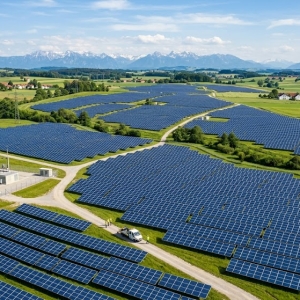
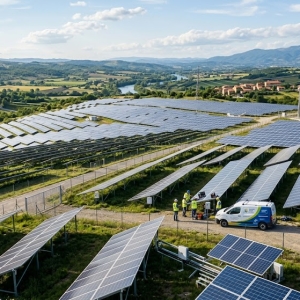
One important trend is the integration of hydrogen with renewable power. Wind and solar developers are exploring hydrogen as a flexible outlet for electricity, while industrial consumers are seeking cleaner feedstock and energy options. Coordinated projects can connect renewable generation, electrolysis, storage, and industrial demand, potentially creating more efficient regional energy systems.
Concentrating producers and consumers in the same geographic area can reduce transportation requirements and make shared pipelines, storage, and services more practical. Ports and established industrial zones may become particularly important because they combine energy infrastructure, large consumers, logistics capabilities, and access to international supply chains.
Manufacturers are increasing system scale, improving efficiency, extending operating life, and developing controls that can respond to variable renewable generation. Alkaline and proton exchange membrane technologies remain prominent, while high-temperature systems and other innovations could expand the range of industrial applications. Buyers are increasingly assessing lifetime performance rather than headline capacity alone.
Hydrogen storage is receiving greater attention as projects seek reliable supply despite fluctuating electricity production. Storage can help separate production from consumption, support operational resilience, and reduce exposure to short-term power fluctuations. The appropriate solution depends on required volume, duration, location, and cost.
Ammonia, methanol, and synthetic fuels can provide alternative pathways for transporting and using renewable energy. These products may be particularly relevant for industries that need molecules but face challenges moving pure hydrogen over long distances.
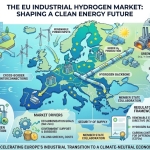
The Europe Industrial Hydrogen Market Trends view shows why market participants need to track technology, infrastructure, policy, demand, and investment developments simultaneously. Changes in one area can quickly affect project economics elsewhere. For example, cheaper renewable electricity can improve electrolyzer utilization, while delayed infrastructure can restrict customer access.
Contracts can support project financing and provide customers with greater visibility over future energy costs. However, contract structures must address price adjustment, volume flexibility, certification, delivery obligations, and performance risk. More sophisticated commercial arrangements are therefore likely to emerge as the market matures.
Monitoring platforms can track electrolyzer efficiency, power consumption, hydrogen purity, equipment health, and maintenance requirements. Advanced analytics can help operators optimize production around electricity prices, renewable availability, and customer demand. These capabilities may improve asset utilization and reduce operating risks.
European stakeholders are examining domestic manufacturing and diversified procurement for electrolyzers, components, power electronics, compression equipment, and control systems. A resilient supply chain can reduce exposure to disruptions and support faster project deployment.
Developers need clarity about what qualifies as renewable or low-carbon hydrogen, how emissions are calculated, and how hydrogen can be traded across borders. Regulatory consistency can improve investor confidence and simplify procurement decisions for industrial users.
Technology firms, utilities, renewable developers, engineering groups, industrial gas companies, ports, and major manufacturers are entering partnerships. This broader ecosystem encourages integrated solutions but also increases competition for customers, equipment, renewable electricity, and skilled personnel.
Looking forward, successful projects will likely share several characteristics: strong industrial demand, competitive power, dependable technology, suitable infrastructure, credible financing, and clear regulatory alignment. The market may therefore progress through regional clusters rather than a uniform continent-wide buildout.
Industrial hydrogen can ultimately become more than a decarbonization tool. It can support energy diversification, industrial modernization, and new value chains for clean fuels and materials. Europe’s challenge is to move from ambitious targets toward commercially sustainable assets. Innovation, infrastructure, and disciplined investment will significantly shape hydrogen’s industrial role.