



In sheet metal fabrication, tooling quality has a direct impact on bending accuracy, production efficiency, and the final quality of the workpiece. As manufacturers handle more complex shapes and high-strength materials, traditional one-piece tooling may not always provide the flexibility and durability needed for modern production.
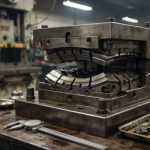
This is one reason segmented forming dies are becoming an increasingly practical option for press brake applications. Instead of using one long, continuous die, segmented tooling is made up of multiple precision-machined sections. This design gives manufacturers more flexibility while making it easier to manage tool wear and different forming requirements.
Why Use Segmented Forming Dies?
A conventional solid die works well for many standard bending operations, but it can become less convenient when production involves different workpiece lengths, complex profiles, or frequent tooling changes.
Segmented forming dies divide the tooling into individual sections. Each segment can be positioned according to the size and shape of the workpiece. This allows operators to create different tooling arrangements without replacing the entire die.
Another benefit is easier maintenance. If one section becomes worn or damaged, it can often be replaced individually instead of changing the complete tooling set. For manufacturers running long production cycles, this can help reduce downtime and make tooling maintenance more manageable.
The segmented structure can also help distribute forming loads across the tooling system. Properly designed and installed segments can provide stable support during demanding bending operations, particularly when processing thicker or higher-strength sheet materials.
Flexibility for Different Forming Applications
One of the main advantages of segmented forming dies is their flexibility.
Different sheet metal products may require different bending widths, profiles, and forming positions. With a segmented setup, operators can adjust the arrangement according to the actual production requirement.
For example, a press brake may be used to produce long structural components during one production run and smaller parts during another. Instead of preparing a completely different long die for every application, individual segments can be rearranged or replaced as needed.
This makes segmented tooling particularly useful for manufacturers handling multiple product types or relatively small production batches.
Material Selection Matters
The performance of a forming die depends heavily on the material used to manufacture it. The tooling needs to withstand repeated compression, friction, and impact without excessive deformation or wear.
High-quality segmented forming dies may be manufactured from tool steels such as AISI D2 or suitable powder metallurgy grades. These materials are valued for their wear resistance and ability to maintain dimensional stability during demanding forming operations.
Heat treatment is another important part of the manufacturing process. Proper hardening and tempering can improve the hardness, strength, and service life of individual die segments. Depending on the tooling design and application, a target hardness in the range of 58–62 HRC may be used.
For applications where surface wear or friction is a concern, additional surface treatments or coatings can also be considered. Options such as TiN or DLC coatings may help reduce friction and improve resistance to surface damage in suitable applications.
The exact material and treatment should always be selected according to the sheet material, forming process, expected load, and production conditions.
Getting Better Results from a Press Brake
Installing segmented forming dies is not simply a matter of placing the segments on a press brake. Correct alignment and positioning are essential for consistent bending results.
Adjacent segments should be properly seated and aligned. Poor positioning can create uneven loading and affect the quality of the finished workpiece. Precision-ground supporting surfaces and suitable clamping systems can help keep the tooling stable during operation.
Press brake deflection should also be considered, particularly during heavy-duty bending. A suitable crowning system can compensate for machine deformation and help maintain more consistent forming results across the working length.
Regular inspection is equally important. Operators should check individual segments for wear, chipping, deformation, or other signs of damage. Detecting a problem early makes it easier to replace or repair the affected section before it causes larger production issues.
Why Segmented Tooling Can Reduce Maintenance Costs
Tool wear is unavoidable in repeated metal forming. The key is to manage it before it affects production quality.
With a conventional long die, damage in one area may eventually require replacement or extensive maintenance of the entire tooling piece. With segmented tooling, the affected section can often be handled separately.
This modular approach can make maintenance more efficient, especially for manufacturers operating large press brakes or producing parts continuously.
It also gives production teams more control over their tooling inventory. Different segments can be prepared for different applications, allowing operators to build the required setup without keeping a large number of complete one-piece dies.
Hongli Technology for Segmented Forming Dies
For manufacturers looking for reliable segmented forming dies, tooling quality and manufacturing precision are important considerations.
Hongli Technology provides forming tooling designed for demanding industrial applications. The company uses CNC machining and precision grinding processes to manufacture tooling components with consistent dimensions and surface quality.
Its tooling solutions can be developed for different press brake applications and production requirements. Material selection, heat treatment, dimensional accuracy, and tooling configuration can all be considered according to the intended application.
For industries such as automotive components, structural parts, equipment enclosures, and other heavy-duty sheet metal applications, properly designed segmented tooling can provide a useful combination of precision, flexibility, and serviceability.
Conclusion
Segmented forming dies offer a practical alternative to traditional one-piece tooling when production requires greater flexibility and easier maintenance. Their modular structure allows manufacturers to adjust tooling arrangements, replace individual sections, and handle different forming requirements more efficiently.
However, good results depend on more than the segmented design itself. Tool material, heat treatment, machining accuracy, alignment, press brake setup, and regular inspection all contribute to overall performance.
For manufacturers dealing with demanding sheet metal forming applications, choosing the right segmented tooling and working with an experienced tooling manufacturer such as Hongli Technology can help create a more reliable and adaptable production process.
https://www.honglitooling.com/news/the-critical-role-of-high-performance-segmented-forming-dies.html