

Europe Solar PV Energy: Technology, Storage, and Grid Integration
Europe’s solar power market is increasingly influencing how the continent thinks about electricity infrastructure. What began as a technology deployment story is becoming a broader market transformation involving generation, networks, storage, consumers, financing, and electricity-market design. The scale of photovoltaic expansion creates new opportunities, but it also changes the conditions under which projects generate and monetize power.
One of the strongest advantages of solar PV is deployment flexibility. Systems can be installed on homes, warehouses, factories, public buildings, brownfield sites, and large ground-mounted locations. This variety allows countries to combine distributed generation with utility-scale capacity. It also means the sector can respond to different land constraints, customer needs, and network conditions across Europe.
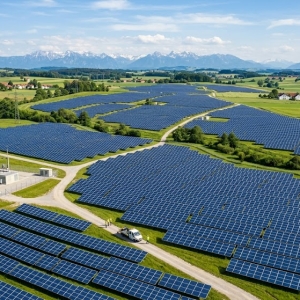
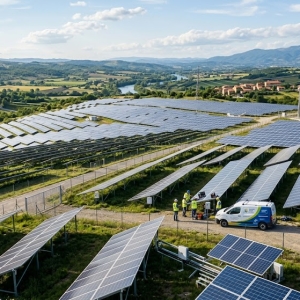
Utility-scale solar is particularly important for adding significant renewable capacity. Developers can optimize projects around irradiation, land availability, interconnection, permitting, and access to offtake markets. Yet the best solar resource does not always create the best investment opportunity. If a region experiences frequent congestion or strong midday price compression, higher generation may not translate into proportionally higher revenues.
Distributed solar has different economics. Rooftop systems can reduce grid purchases for households and businesses, especially when consumption overlaps with daytime production. Commercial facilities with stable daytime loads may capture more of the generated value internally. Smart energy management can strengthen this model by coordinating solar, batteries, electric vehicles, heating systems, and flexible loads.
This integration is becoming more relevant as electricity demand evolves. Electrification of transport, buildings, and industrial processes can create additional daytime consumption, potentially improving the usefulness of local solar generation. Data-driven controls can help customers shift flexible demand toward periods of strong solar output. These developments connect photovoltaic deployment with the broader flexibility market.
Grid constraints remain one of the most important barriers to efficient growth. Connection queues can become lengthy in high-demand areas, while substations may require reinforcement before new projects can export their full capacity. Developers therefore need to understand network plans, queue positions, protection requirements, and potential export limits. Projects that ignore these details may face delayed commissioning or unexpected redesign costs.
Price dynamics are equally important. As solar generation becomes more concentrated in daylight hours, periods of oversupply can become more frequent. Wholesale prices may decline during high-output periods, while evening prices remain comparatively stronger. This phenomenon increases the importance of captured-price forecasting. Annual average electricity prices alone can hide the actual revenue conditions experienced by a solar asset.
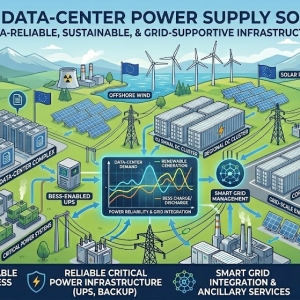
Storage provides one possible response. Batteries can shift part of the generation profile toward periods with stronger prices or system demand. They may also support grid services and reduce certain forms of curtailment when market rules allow. However, battery economics depend on cycling requirements, degradation, market access, connection rules, and the ability to stack multiple revenue streams.
Financing models are evolving alongside these technical changes. Investors increasingly examine contracted revenues, merchant exposure, counterparty quality, construction schedules, and operating assumptions together. Power purchase agreements can improve visibility, while auction-based support and two-way contracts for difference can create alternative approaches to revenue stabilization. Contract terms still need careful assessment because imbalance, shaping, and settlement provisions can transfer risk back to the generator.
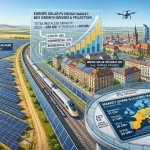
The Europe Solar PV Energy Market Size perspective therefore needs to extend beyond installed capacity. Market scale is increasingly connected with usable generation, network accessibility, revenue quality, and customer demand. Growth opportunities are emerging for developers, EPC firms, storage providers, aggregators, software companies, financiers, and asset managers that can address these interconnected requirements.
Over coming years, European solar will become more operationally sophisticated. Projects will be judged by generation, grid access, captured prices, buyers, flexibility, and alignment with changing electricity-system conditions and infrastructure needs locally.
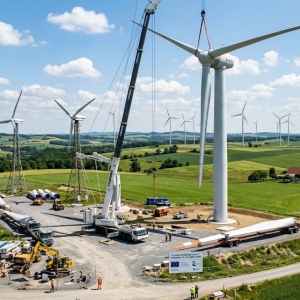
Supply-chain resilience will remain important. Modules are only one part of delivery; transformers, switchgear, cables, protection equipment, and grid-interface systems can influence schedules. EPC coordination, procurement planning, commissioning readiness, and digital monitoring will increasingly determine whether planned capacity becomes reliable operating generation. These details can materially affect project costs and commercial operation dates.