





Market Overview
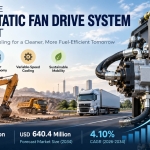
According to the provided market report, the global automotive hydrostatic fan drive system market reached USD 441.0 Million in 2025. Looking forward, the market is projected to reach USD 640.4 Million by 2034, exhibiting a growth rate (CAGR) of 4.10% during 2026-2034. Market growth is driven by stringent emission and fuel economy regulations, expanding off-road and commercial vehicle fleets, and rising adoption of variable-speed hydrostatic cooling systems that reduce parasitic engine losses.
Automotive Hydrostatic Fan Drive System Market Report: Key Highlights
-
Market Size & Growth: The global automotive hydrostatic fan drive system market share reached USD 441.0 Million in 2025 and is projected to reach USD 640.4 Million by 2034, registering a CAGR of 4.10% during 2026–2034.
-
Regional Leadership: Asia Pacific represents the largest regional market, accounting for 42.7% of the market in 2025, supported by China's large off-highway equipment manufacturing base, India's growing commercial vehicle fleet, and Japan's advanced hydraulics industry.
-
By Vehicle Type: The market covers off-road vehicles, on-road vehicles, and train, metro, and tram applications, with off-road vehicles representing the largest segment at 46.2% in 2025.
-
By Component: Variable axial piston pumps represent the largest component segment, accounting for 34.8% of the market in 2025.
-
Key Market Drivers: Stringent emission and fuel economy regulations, expansion of off-road and commercial vehicle fleets, hybrid commercial vehicle adoption, and increasing demand for mining and construction equipment.
-
Key Market Trends: IoT-enabled hydrostatic controls, variable displacement pump innovation, electro-hydraulic hybrid fan drives, and modular system architectures for multi-platform deployment.
-
Key Market Restraints: High initial system costs, electrification-related disruption, and hydraulic fluid maintenance requirements.
-
Key Market Opportunities: Smart connected controls, rail and mass transit applications, emerging-market expansion, and development of electro-hydraulic and digitally controlled systems.
-
Key Players: Robert Bosch GmbH, Parker-Hannifin Corporation, and Bucher Industries AG are among the key companies competing in the global market.
What Is Driving Automotive Hydrostatic Fan Drive System Market Growth in 2026?
Stringent Emission and Fuel Economy Regulations
Stringent emission and fuel economy regulations represent one of the major factors driving demand for automotive hydrostatic fan drive systems. Euro VI, China-VI, and EPA GHG Phase 3 standards require measurable reductions in fuel consumption and CO₂ emissions from heavy commercial vehicles. Hydrostatic fan drives can deliver fuel savings of 3–8% compared with belt-driven alternatives by reducing parasitic engine losses and allowing fan speed to respond to actual cooling requirements.
As emission requirements continue to become more demanding, vehicle manufacturers are increasingly incorporating variable-speed cooling technologies into commercial and off-road vehicle platforms. This is supporting the adoption of hydrostatic fan drives as part of broader vehicle efficiency and thermal-management strategies.
Expansion of Off-Road and Commercial Vehicle Fleets
The expansion of construction, agricultural, mining, and commercial vehicle fleets is another key factor supporting market growth. Off-road equipment such as excavators, wheel loaders, bulldozers, agricultural tractors, and mining haul trucks frequently operates under high and variable engine loads, creating significant thermal-management requirements.
Hydrostatic fan drive systems enable cooling performance to respond dynamically to engine load and coolant temperature. As infrastructure development, construction activity, agricultural mechanization, and resource extraction expand across various markets, demand for efficient cooling systems is consequently increasing.
Rising Adoption of Hybrid Commercial Vehicles
The growing adoption of hybrid commercial vehicles is creating additional demand for hydrostatic fan drive systems. Hybrid trucks and buses can operate their engines intermittently and across variable load conditions, making conventional engine-speed-dependent cooling systems less suitable for certain configurations.
Hydrostatic fan drives allow cooling performance to be maintained independently of engine RPM. This capability makes the technology particularly relevant to vehicle platforms where engine operating conditions vary significantly.
Increasing Mining and Construction Equipment Demand
Rising demand for mining and construction equipment is further supporting the market. Mining haul trucks and other heavy-duty equipment can operate under extreme ambient temperatures and demanding duty cycles, requiring reliable thermal management.
Hydrostatic fan drive systems provide variable-speed cooling and can maintain required airflow under changing operating conditions. Continued expansion of mining and construction activities is therefore creating opportunities for manufacturers of hydrostatic fan drive systems.
Automotive Hydrostatic Fan Drive System Market Overview
An automotive hydrostatic fan drive system is a specialized mechanism that uses hydraulic fluid and a variable-displacement pump-motor circuit to control radiator fan speed according to real-time cooling demand. Unlike belt-driven mechanical fans that operate at a fixed ratio to engine speed, hydrostatic systems allow fan speed to vary from zero to maximum independently of engine RPM.
The system architecture generally includes a variable axial piston pump, fixed gear motor, engine control unit (ECU), oil cooler, hydraulic control valves, and sensors. The ECU processes information such as coolant temperature, engine load, and ambient temperature to regulate hydraulic flow and optimize fan operation.
The technology serves off-road vehicles, including excavators, wheel loaders, agricultural tractors, and mining haul trucks; on-road commercial vehicles such as heavy commercial trucks, buses, and emergency vehicles; and rail applications including locomotives, metro trains, and trams.
Market Dynamics
Market Drivers
-
Stringent Emission and Fuel Economy Norms: Increasing regulatory requirements are encouraging vehicle manufacturers to adopt technologies that reduce fuel consumption and CO₂ emissions.
-
Off-Road and Commercial Vehicle Fleet Expansion: Growth in construction, agriculture, mining, and commercial transportation is expanding the installed base of vehicles requiring advanced cooling systems.
-
Hybrid Commercial Vehicle Adoption: Variable engine operating conditions in hybrid trucks and buses are supporting demand for cooling systems that can operate independently of engine RPM.
-
Mining and Construction Equipment Demand: Heavy-duty equipment operating under high thermal loads requires reliable and responsive cooling systems, supporting hydrostatic fan drive adoption.
Market Restraints
-
High Initial System Cost: Hydrostatic fan drive systems have higher OEM costs than conventional belt-driven fan assemblies, which can constrain adoption in price-sensitive applications.
-
Electrification Disruption: Electric and fuel-cell commercial vehicles can use electrically driven fans instead of engine-driven hydrostatic cooling systems, creating a long-term headwind in certain on-road applications.
-
Hydraulic Fluid Maintenance Complexity: Hydraulic fluid changes, filter replacement, and pressure calibration require specialized maintenance capabilities, which can create operational challenges in some markets.
Market Opportunities
-
Smart IoT-Enabled Hydrostatic Controls: Connected sensors and cloud-based diagnostics can enable predictive maintenance, remote calibration, and system performance optimization.
-
Rail and Mass Transit Applications: Modernization of locomotive, metro, and tram fleets is creating opportunities for hydrostatic fan drives adapted to rail cooling requirements.
-
Emerging Market Expansion: India, Brazil, Indonesia, and Saudi Arabia represent potential growth markets as emission standards evolve and off-highway fleets expand.
-
Electro-Hydraulic Hybrid Systems: Integration of electric motor-driven hydraulic pumps with conventional hydrostatic circuits is creating new opportunities for hybrid commercial vehicle applications.
Market Challenges
-
Engineering Integration Complexity: Hydrostatic fan drives must interface with vehicle engine management, coolant, and transmission systems, resulting in significant platform-specific engineering requirements.
-
Competition from Electronically Controlled Viscous Clutch Fans: Advanced viscous clutch systems offer a lower-cost alternative for some truck and bus applications and create competitive pressure in the on-road commercial vehicle segment.
Emerging Market Trends
IoT Integration and Connected Hydrostatic Controls
Hydrostatic fan drive ECUs are increasingly being integrated with vehicle telematics platforms. This enables real-time monitoring of pump pressure, motor speed, fluid temperature, and fan efficiency while supporting predictive maintenance and system optimization.
Variable Displacement Pump Innovation
Variable displacement pump technology remains an important area of development. Bosch Rexroth's A1VO Series 10 is identified in the report as a compact axial piston variable pump for open-circuit hydrostatic drives, offering infinitely adjustable flow, low noise, high power density, and adaptable control options.
Electro-Hydraulic Hybrid Fan Drive Systems
As mild-hybrid powertrains expand in the commercial vehicle segment, suppliers are developing electro-hydraulic fan drive architectures that combine electric motor-driven hydraulic pumps with conventional hydrostatic circuits. These systems can provide greater flexibility in managing cooling requirements across variable engine operating conditions.
Modular System Architecture for Multi-Platform Deployment
Modular hydrostatic fan drive platforms with standardized pump-motor-ECU interfaces can be adapted across multiple vehicle platforms without requiring complete system redesign. This approach can reduce OEM integration engineering requirements and expand the addressable market to mid-volume vehicle platforms.
Industry Value Chain Analysis
The automotive hydrostatic fan drive system value chain extends from hydraulic component manufacturing through system assembly, ECU coding, OEM vehicle integration, aftermarket distribution, and end-user maintenance.
-
Raw Materials & Hydraulic Components: High-grade steel alloys, hydraulic sealing materials, piezoelectric sensors, and precision aluminum castings.
-
Pump & Motor Manufacturing: Variable displacement pump manufacturers, fixed gear motor producers, and hydraulic component specialists.
-
System Assembly & ECU Coding: Tier-1 hydraulic system integrators, programmable fan drive controller developers, and OEM engineering divisions.
-
OEM Procurement & Integration: Off-highway equipment manufacturers, commercial vehicle OEMs, and agricultural machinery producers.
-
Aftermarket Distribution & Service: Authorized dealer networks, hydraulic parts distributors, and regional fluid power service providers.
-
End-User Operation & Maintenance: Fleet operators, construction and mining companies, long-haul transport operators, and rail maintenance organizations.
Technology Landscape in the Automotive Hydrostatic Fan Drive System Industry
Variable Axial Piston Pump Technology
Variable axial piston pumps represent the core hydraulic power source in hydrostatic fan drive systems. Operating at high hydraulic pressures with variable displacement, these pumps translate ECU control signals into precise hydraulic flow to the fan motor. Their ability to continuously adjust output according to cooling demand is central to the efficiency advantages of hydrostatic fan drives.
Fixed Gear Motor Technology
Fixed displacement gear motors convert hydraulic flow from the piston pump into mechanical rotation for the cooling fan. Their relatively simple construction, reliability, and suitability for demanding operating environments make them an important component in hydrostatic fan drive architectures.
Engine Control Unit and Sensor Integration
The ECU represents the intelligence layer of the hydrostatic fan drive system. It processes inputs from coolant temperature sensors, engine load signals, and ambient temperature data to optimize fan speed in real time. Increasing connectivity and multi-input control logic are further expanding the role of ECU technology within these systems.
Automotive Hydrostatic Fan Drive System Market Segmentation Analysis
The market is segmented based on vehicle type, component, pump type, and region.
By Vehicle Type
-
Off-Road Vehicles
-
On-Road Vehicles
-
Train, Metro, and Trams
Off-road vehicles lead the market by vehicle type, accounting for 46.2% of the market in 2025. This segment includes construction equipment such as excavators, wheel loaders, and bulldozers; agricultural machinery including tractors and combine harvesters; and mining vehicles such as haul trucks and loaders.
These vehicles operate under highly variable thermal loads and demanding working conditions, increasing the importance of responsive cooling systems. Hydrostatic fan drives allow cooling performance to be adjusted according to actual engine requirements, supporting their adoption across off-road applications.
On-road vehicles account for 38.5% of the market and include heavy commercial trucks, long-haul buses, and specialized municipal vehicles. Train, metro, and tram applications account for 15.3%, representing a specialized market supported by fleet modernization and thermal-management requirements in rail applications.
By Component
-
Variable Axial Piston Pump
-
Fixed Gear Motor
-
Engine Control Unit
-
Oil Cooler
-
Hydraulic Valves and Sensors
Variable axial piston pumps dominate the component segment, accounting for 34.8% of the market in 2025. As the primary hydraulic power source, these pumps regulate hydraulic flow according to ECU signals and cooling requirements, making them a critical component in hydrostatic fan drive systems.
Fixed gear motors hold a 22.6% share, while engine control units account for 17.1%. Oil coolers represent 13.4%, with hydraulic valves and sensors collectively accounting for 12.1% of the component breakdown.
Regional Market Insights
-
Asia Pacific
-
Europe
-
North America
-
Latin America
-
Middle East and Africa
Asia Pacific leads the global automotive hydrostatic fan drive system market, accounting for 42.7% of the market in 2025. The region's position is supported by China's large construction equipment manufacturing base, India's expanding commercial vehicle fleet under BS-VI emission norms, and Japan's established hydraulics manufacturing ecosystem.
Europe accounts for 24.5% of the market and benefits from stringent Stage V off-highway and Euro VI on-road emission requirements. North America holds an 18.1% share, supported by demand from heavy-duty trucking and mining equipment.
Latin America represents 8.3%, while the Middle East and Africa account for 6.4% of the market. Growth across these regions is supported by agricultural machinery, mining equipment, construction activity, infrastructure investment, and increasing regulatory attention to fuel consumption and emissions.
Key Regional Insight: Asia Pacific's Strategic Position
Asia Pacific's leading position in the global automotive hydrostatic fan drive system market is supported by the region's extensive off-highway equipment manufacturing and growing commercial vehicle fleets. China's construction equipment industry represents a major source of demand, while India's expanding commercial vehicle market and BS-VI compliance requirements are encouraging the adoption of advanced thermal-management technologies.
Japan's precision hydraulics manufacturing ecosystem further strengthens the regional supply chain, providing pump, motor, valve, and related components for domestic and international OEM platforms.
Competitive Landscape in the Automotive Hydrostatic Fan Drive System Industry
The global automotive hydrostatic fan drive system market is moderately consolidated. Robert Bosch GmbH, Parker-Hannifin Corporation, and Bucher Industries AG are among the leading companies, with the provided report estimating that these three companies collectively account for approximately 55–60% of global revenues in 2025.
Competition centers on variable-pump efficiency, ECU control sophistication, system integration capabilities, product reliability, and application engineering support. Companies are also focusing on connected controls, modular system architectures, and integrated hydraulic solutions to strengthen their positions across off-highway and commercial vehicle applications.
Key Automotive Hydrostatic Fan Drive System Market Players Include:
-
Robert Bosch GmbH
-
Parker-Hannifin Corporation
-
Bucher Industries AG
-
and other regional and specialized suppliers
Key Company Profiles
Robert Bosch GmbH
Robert Bosch GmbH operates Bosch Rexroth AG, which is identified in the report as a global leader in drive and control technologies, including hydraulic fan drive systems.
Product Portfolio: A1VO and A10VO variable axial piston pumps, fixed displacement gear motors, HydraForce cartridge valve manifolds, Open Core Engineering ECU platforms, and complete fan drive system assemblies for off-highway and commercial vehicle applications.
Recent Developments: Bosch Rexroth AG recorded sales of EUR 6.45 Billion in FY 2025, while order intake increased 8.9% to EUR 6.6 Billion. The company invested approximately EUR 560 Million in R&D and facilities, with a focus on AI-enabled automation and digital hydraulic services.
Strategic Focus: Electro-hydraulic hybrid fan drive development, IoT-connected diagnostics, Stage V and Euro 7 pre-compliance architecture, and OEM co-engineering programs.
Parker-Hannifin Corporation
Parker-Hannifin Corporation is one of the major industrial and mobile hydraulics companies and supplies hydrostatic fan drive systems to off-highway, commercial vehicle, and rail OEMs.
Product Portfolio: PVH variable piston pumps, F12 and TF series bent-axis fixed displacement motors, LifeSense IoT-enabled fan drive controllers, hydraulic system integration kits, and turnkey fan drive packages.
Recent Developments: Parker-Hannifin Corporation reported quarterly sales of USD 5.49 Billion for the quarter ended March 2026, representing growth of 10.6%, with organic growth of 6.5%, according to the provided report.
Strategic Focus: IoT connectivity and predictive maintenance, expansion across North American and European heavy-duty truck OEMs, modular platform development, and system integration for hybrid commercial vehicle programs.
Market Concentration Analysis
The global automotive hydrostatic fan drive system market is moderately concentrated. According to the provided report, Robert Bosch GmbH, Parker-Hannifin Corporation, and Bucher Industries AG collectively account for approximately 55–60% of global revenues in 2025.
Below the leading suppliers, the market includes regional manufacturers and specialist companies serving specific vehicle types, geographic markets, and application configurations. Consolidation is also shaping the competitive environment, with strategic acquisitions being used to expand capabilities across pumps, cartridge valves, manifolds, and digital control technologies.
Investment & Growth Opportunities
Fastest Growing Segments
Variable axial piston pumps, IoT-enabled fan drive ECUs, electro-hydraulic hybrid systems, and rail application fan drives represent important growth areas through 2034. These technologies address the increasing need for efficient cooling, digital monitoring, and flexible thermal management across commercial, off-road, and rail applications.
Emerging Market Expansion
India, Brazil, Indonesia, and Saudi Arabia represent emerging opportunities as emission standards evolve and off-highway equipment fleets expand. Growing construction, agricultural, mining, and commercial vehicle activity is expected to support demand for variable-speed cooling technologies.
Venture and Institutional Investment Trends
Investment in digital connectivity for fan drive ECUs is creating opportunities for predictive maintenance, fleet analytics, and performance-monitoring services. Strategic and institutional interest in specialized hydraulic component capabilities is also supporting the development of integrated fan drive system portfolios.
Automotive Hydrostatic Fan Drive System Market Outlook to 2034
The global automotive hydrostatic fan drive system market is positioned for consistent growth through 2034. From USD 441.0 Million in 2025, the market is projected to reach USD 640.4 Million by 2034, representing incremental market value of USD 199.4 Million at a CAGR of 4.10% during 2026-2034.
Off-road and commercial vehicle demand is expected to remain an important source of market growth, supported by construction and mining activity, expanding vehicle fleets, and increasingly stringent emission and fuel economy requirements. At the same time, IoT-enabled controls, variable displacement pump technologies, electro-hydraulic hybrid architectures, and modular system designs are creating opportunities for continued technological development.
Asia Pacific is expected to remain the leading regional market, while Europe, North America, Latin America, and the Middle East and Africa offer additional growth opportunities. The evolution of vehicle powertrains and the increasing adoption of electric vehicles may influence demand differently across applications, particularly in on-road commercial vehicles.
About the Author:
IMARC Group is a leading global market research company providing data-driven insights and expert consulting services to businesses seeking to achieve their strategic objectives. With a multi-disciplinary team of industry experts, IMARC delivers thorough, reliable market intelligence across sectors including Energy and Mining, Construction and Manufacturing, Automotive, Chemicals and Materials, and more.
Media & Sales Contact:
IMARC Group
United States: +1-201-971-6302
India: +91-120-433-0800
United Kingdom: +44-753-714-6104