



San Francisco roofing involves more than choosing a roofing material and putting it on a house. The city's mix of older and newer homes, coastal conditions, different roof designs, and varied building layouts means every property can have its own roofing concerns.
For homeowners, the most useful approach is to understand how the roof is performing, pay attention to changes, and address problems before they become larger projects.
San Francisco Roofs Don't All Age the Same Way
Two homes on the same street can have completely different roofing conditions.
One may have recently been reroofed, while another may have an older roof with several repairs.
The materials may also differ.
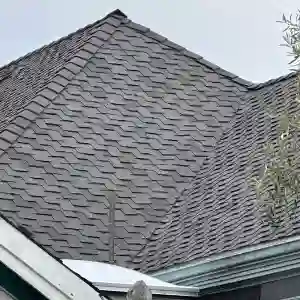
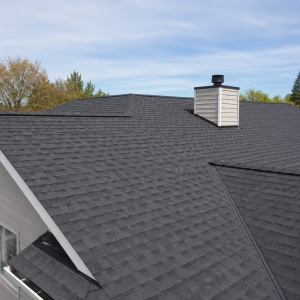
Asphalt shingles, tile, metal, low-slope systems, and other roofing materials all have different characteristics.
That is why roof age alone doesn't tell the complete story.
A roof inspection can reveal conditions that aren't obvious from the ground.
What Should Homeowners Watch For?
You don't need to climb onto the roof every weekend to keep an eye on it.
There are several things homeowners can notice from inside and around the property.
For example:
- Water stains on ceilings
- Damp areas after rain
- Missing or damaged roofing materials
- Damaged flashing
- Sagging sections
- Blocked or overflowing gutters
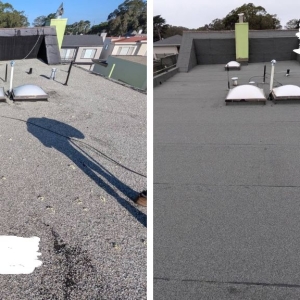
- Water around skylights
- Peeling exterior materials near roof areas
None of these signs automatically means a complete roof replacement is necessary.
They do provide a reason to investigate.
San Francisco's Weather and Roofing
San Francisco's climate can expose roofing systems to moisture, wind, temperature changes, and coastal conditions.
The impact varies depending on the property's location and roof design.
Good drainage is particularly important.
Water needs a clear path away from the roofing system.
Blocked gutters, damaged downspouts, or drainage problems can allow water to remain where it shouldn't.
Gutters Are Part of the Bigger Picture
Homeowners sometimes think of gutters as completely separate from roofing.
They're closely connected.
A roof collects rainwater, and gutters and downspouts help direct that water away from the building.
If gutters are clogged or damaged, water can overflow near walls, roof edges, foundations, and other areas.
Keeping the drainage system maintained is therefore part of taking care of the property as a whole.
Don't Ignore Flashing
Flashing is another component that doesn't get much attention until there's a leak.
It is used around vulnerable roof areas to help direct water away from joints and penetrations.
Flashing can be found around skylights, walls, roof edges, chimneys, vents, and other transitions.
If flashing becomes damaged or deteriorated, water can find a path into the building.
Sometimes the roofing material itself looks fine while the flashing has become the weak point.
Skylights Need Attention Too
A skylight adds natural light to a home, but it also creates an opening in the roof.
That makes the installation and surrounding flashing important.
If you notice condensation, cracking, staining, or water around a skylight, don't automatically assume the glass or dome is the only issue.
The surrounding flashing and roofing should also be inspected.
UL Roofing provides skylight replacement along with roofing and flashing services in San Francisco and the Bay Area.
When Is Roof Repair Enough?
A localized roofing problem doesn't necessarily mean the whole roof needs replacement.
For example, isolated damage may be repairable.
A contractor should look at the extent of the issue and the condition of the surrounding roof.
If repairs are becoming frequent or problems are appearing across multiple areas, replacement may eventually become a more practical option.
The decision should be based on the actual condition of the roofing system.
How to Prepare for a Roofing Estimate
Before a contractor visits, make a note of any problems you've noticed.
When did the leak first appear?
Does it happen only during heavy rain?
Have you noticed staining around a skylight?
Have gutters recently overflowed?
Has another contractor repaired the same area before?
These details can help the contractor understand what has been happening.
During the inspection, ask the contractor to explain what they found in straightforward terms.
Comparing San Francisco Roofing Contractors
A homeowner doesn't need to choose a contractor based only on the first search result.
Compare practical information such as:
- Local experience
- Services
- Licensing and insurance
- Inspection process
- Written estimates
- Materials
- Workmanship approach
- Communication
- Reviews and references
A contractor's ability to explain the proposed work can be just as useful as the estimate itself.
What About Roof Replacement?
Replacement becomes relevant when the existing roofing system has widespread deterioration or has reached a condition where repeated repairs are no longer practical.
But replacement is a significant project.
Before agreeing to it, ask what is causing the current problems and whether repair remains a reasonable option.
If replacement is necessary, ask what materials are being proposed and why.
The estimate should also explain preparation, removal, disposal, flashing, and potential repairs underneath.
UL Roofing in San Francisco
UL Roofing is a family-owned and operated roofing company that has served San Francisco and the Bay Area since 1988.
The company provides residential and commercial roofing services, including repair, replacement, maintenance, roof coating, patching, flashing, skylight replacement, gutters and downspouts, and sheathing work.
That range of services can be useful when a roofing issue involves more than the main roof surface.
Don't Wait for a Major Leak
Roof problems don't always announce themselves with water pouring through the ceiling.
Sometimes the first indication is a small stain, a damaged shingle, a loose piece of flashing, or a gutter that suddenly stops draining properly.
Getting these issues checked doesn't mean you're committing to a major project.
It simply gives you more information about the condition of the roof.
Final Thoughts
Good San Francisco roofing starts with paying attention to the whole system.
The roof surface, flashing, skylights, gutters, drainage, and underlying structure all play a role in protecting the building.
Homeowners don't need to diagnose every roofing problem themselves.
Instead, watch for changes, keep drainage systems maintained, and have questionable areas inspected before they become more difficult to address.
UL Roofing works with homeowners and commercial property owners throughout San Francisco and the Bay Area, providing roofing services based on the needs of the individual property.
FAQs
How often should a San Francisco roof be inspected?
The ideal schedule depends on the roof's age, material, condition, maintenance history, and exposure. Older or problematic roofs may benefit from more frequent inspections.
What are common roofing problems in San Francisco homes?
Leaks, damaged flashing, worn roofing materials, drainage issues, skylight problems, and gutter concerns can all occur.
Does a small roof leak require replacement?
Not necessarily. A localized leak may be repairable if the rest of the roof is in good condition.
Should gutters be included in a roofing inspection?
It can be useful to check gutters and downspouts because drainage is closely connected to roof performance.
When should a homeowner consider roof replacement?
Replacement may be appropriate when deterioration is widespread, repairs are repeatedly needed, or the existing roofing system is no longer practical to maintain.
Does UL Roofing serve residential and commercial properties?
Yes. UL Roofing provides both residential and commercial roofing services throughout San Francisco and the Bay Area.