






A global manufacturer reviews its supplier base and finds 14,000 vendors, six overlapping contracts for the same category, and no clear view of who is financially at risk. Procurement is stretched thin. Leadership wants savings, resilience, and sustainability, all at once. The team has the ambition but not the bandwidth.
This is why Procurement Services has become a strategic conversation in the boardroom. Enterprises are looking beyond software alone and bringing in specialist partners who combine advisory, outsourcing, analytics, and technology. For CXOs and procurement leaders, the question is no longer whether to modernize sourcing. It is who can help do it at scale.
Click Here For More Information: https://qksgroup.com/market-research/spark-matrix-procurement-services-q2-2025-8611
Market Overview: Advisory, Outsourcing, and Analytics in One Model
QKS Group describes Procurement Services as the combination of strategic advisory, end-to-end procurement outsourcing, and managed analytics. It takes a holistic view of the procurement lifecycle, from designing and planning tailored workflows to executing digital contracting and risk management.
Procurement Service Providers (PSPs) typically support:
- Category management and strategic sourcing
- Source-to-pay and procure-to-pay operations
- Supplier management, onboarding, and performance tracking
- Contract management and digital contracting
- Spend analytics and savings tracking
- Risk, compliance, and sustainability programs
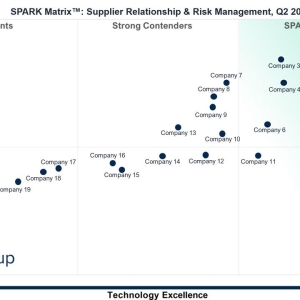
QKS Group's SPARK Matrix evaluates providers including Accenture, Capgemini, Chain IQ, Corbus, Dragon Sourcing, EXL, Genpact, GEP, IBM, Infosys, LogicSource, TCS, Tech Mahindra, Wipro, and WNS. The field mixes global consulting firms, IT services leaders, and procurement specialists, each bringing a different blend of strategy and execution.
Key Challenges Businesses Face
Procurement leaders carry growing expectations with limited capacity. Common obstacles include:
- Cost pressure. Inflation and volatile commodity prices make savings harder to deliver.
- Supply chain disruption. Geopolitical shifts and supplier failures expose single points of failure.
- Limited visibility. Spend data sits in disconnected systems, which hides savings opportunities.
- Talent shortages. Skilled category managers and sourcing analysts are hard to hire and keep.
- Tail spend. Low-value purchases consume effort but rarely get strategic attention.
- Supplier risk and compliance. Regulations on ethics, ESG, and data protection keep expanding.
- Technology overload. Many enterprises own tools they cannot fully use or integrate.
Key Trends and Innovations
AI-driven analytics. Providers use machine learning to classify spend, forecast demand, flag anomalies, and recommend sourcing strategies.
Generative AI in sourcing. Drafting RFPs, summarizing supplier responses, and supporting negotiation preparation are becoming faster and more consistent.
Digital contracting. Automated contract creation, clause libraries, and obligation tracking reduce cycle time and leakage.
Intelligent risk management. Continuous supplier monitoring covers financial, operational, geopolitical, and compliance signals.
Sustainable and inclusive procurement. Supplier diversity, carbon reduction, and ethical sourcing are now built into programs.
Emerging technologies. Blockchain supports traceability, and IoT data improves visibility into goods and assets across the supply chain.
Outcome-based models. Pricing tied to savings, service levels, or business results is gaining ground over traditional effort-based contracts.
Benefits and Business Impact
A strong procurement services partnership can deliver:
- Measurable savings. Better category strategies and negotiation drive cost reduction.
- Operational efficiency. Standardized, automated processes reduce cycle times and manual work.
- Access to expertise. Enterprises gain specialist talent without building every capability in-house.
- Improved resilience. Early risk signals help teams act before disruption spreads.
- Stronger compliance. Consistent controls and audit trails reduce policy leakage.
- Scalability. Capacity can flex with business demand, new markets, or acquisitions.
- Sustainability progress. Supplier data supports ESG reporting and diversity targets.
Real-World Use Cases
Cost transformation. A consumer goods company engages a PSP to review indirect spend. Category redesign and supplier consolidation uncover savings that internal teams lacked time to pursue.
Procurement outsourcing. A telecom operator hands off transactional buying and supplier onboarding, allowing internal staff to focus on strategic categories.
Risk monitoring. A healthcare group uses managed analytics to track supplier financial health and geographic exposure, then qualifies alternate sources before a disruption hits.
Digital contracting rollout. A financial institution standardizes contract templates and approvals, which shortens cycle times and improves compliance.
ESG and diversity programs. A retailer sets supplier diversity and carbon goals, and its provider builds the tracking and reporting framework to support them.
How to Choose the Right Solution
Start with business goals, whether cost, speed, resilience, or sustainability. Then evaluate providers against these criteria:
- Scope of services. Check coverage across advisory, outsourcing, and analytics.
- Industry and category expertise. Look for proven depth in your sectors and spend areas.
- Technology and AI capability. Ask what is delivered today and how it connects to your systems.
- Delivery footprint. Confirm language, geography, and time-zone coverage.
- Commercial model. Understand pricing structures and whether outcomes are shared.
- Risk and compliance strength. Review controls, security, and ESG capabilities.
- Change management. Strong adoption support often decides success.
- Proven results. Customer references and measurable outcomes matter most.
An independent view helps cut through sales claims. QKS Group's SPARK Matrix compares providers on capability, differentiation, and market position, which supports a more objective shortlist.
Future Outlook (2025–2028)
Over the next few years, procurement services will become more intelligent and more outcome-driven. Expect AI copilots to support category managers, and autonomous workflows to handle routine sourcing and buying tasks.
Supply chain resilience, regulatory scrutiny, and sustainability reporting will keep rising on the agenda. Providers will increasingly embed analytics, risk intelligence, and ESG data into everyday procurement decisions. Those that blend deep category expertise with advanced technology and flexible commercial models will lead the market.
Download Sample Report Here: https://qksgroup.com/download-sample-form/spark-matrix-procurement-services-q2-2025-8611
Conclusion
Procurement has moved from cost control to value creation. With the right partner, enterprises gain speed, visibility, and resilience without stretching internal teams. A capable Procurement Services provider brings strategy, execution, and intelligence into one model.
For CXOs and procurement leaders, the next step is to define clear goals, assess internal gaps, and compare providers through an independent framework such as QKS Group's SPARK Matrix.