




Valve-regulated lead-acid (VRLA) batteries remain an important power source for UPS systems, telecommunications equipment, emergency lighting, and backup power applications. To meet customer expectations for product reliability and consistent performance, battery manufacturers need production processes that are both stable and efficient.
Choosing suitable manufacturing equipment is an important step toward achieving these goals. A well-matched VRLA battery production machine can help reduce repetitive manual work, improve assembly consistency, and support quality checks at different stages of production. However, equipment selection should not focus on a single machine or its advertised speed. The performance of the entire production line depends on how effectively each process connects with the next.
1. Essential Equipment for VRLA Battery Manufacturing
VRLA battery production involves several operations, from assembling battery plates to sealing the container and checking the finished product. Each stage requires equipment that matches the battery design and the manufacturer's production requirements.
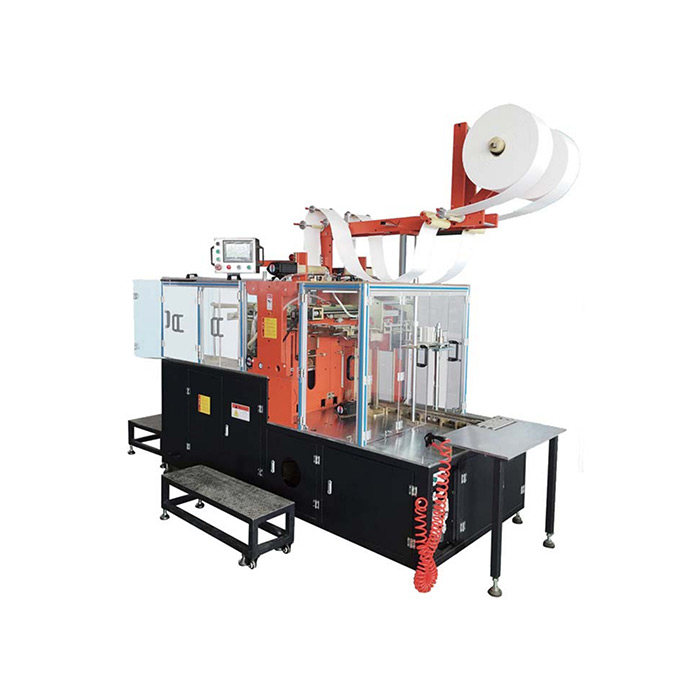
Plate Packing and Assembly Equipment
Plate packing is an important step in VRLA battery manufacturing. Positive and negative plates are arranged with separators to form the plate groups used inside the battery.
A suitable VRLA battery plate packing machine helps position these materials consistently and reduces unnecessary manual handling. Accurate assembly is important because incorrect plate positioning or separator placement may affect subsequent production steps.
Before purchasing a plate packing machine, manufacturers should confirm the supported plate dimensions, separator materials, battery models, and expected production capacity. Compatibility with the existing assembly process is equally important, particularly for factories producing several battery formats.
Battery Welding Machines
Reliable electrical connections are essential for stable battery performance. Inter-cell welding connects the internal cell components, while terminal welding establishes the external electrical connections.
Inconsistent welding can create weak joints or increased electrical resistance. Automatic battery welding equipment can help improve positioning and repeatability, provided that the welding parameters are properly controlled.
Manufacturers should evaluate the supported battery structures, welding methods, production speed, and inspection requirements. Regular checks of connection quality can also help identify defects before the batteries move to the next production stage.
Heat Sealing and Epoxy Dispensing Equipment
Battery containers and covers must be joined securely to help prevent leakage and protect internal components.
Automatic heat sealing machines are used to join compatible container and cover materials. The quality of the seal depends on factors such as temperature, pressure, processing time, and material compatibility.
Some battery designs also require epoxy dispensing equipment to apply resin to specific areas. Accurate dispensing helps maintain consistent application quantities, while suitable curing conditions support the intended sealing performance.
When selecting this equipment, manufacturers should confirm the materials used in their battery designs and establish processing parameters according to the relevant technical requirements.
2. Why Battery Testing Equipment Matters
A battery may look acceptable from the outside while still containing an electrical or sealing defect. For this reason, visual inspection alone is not enough to support a reliable quality management process.
Suitable testing equipment helps manufacturers identify potential problems before finished batteries are shipped.
Common testing applications include the following.
-
Internal resistance testers: Measure internal resistance under specified test conditions and help identify abnormal results that may indicate connection or assembly problems.
-
Short-circuit testers: Check for unintended electrical connections according to the equipment's test method and safety requirements.
-
Air leakage testers: Evaluate enclosure integrity and help detect leakage paths in battery containers or sealed assemblies.
Nexa Battery Technology provides equipment for these testing applications as part of its battery manufacturing equipment range.
The choice of testing equipment should reflect the battery design, production stage, and quality requirements. Manufacturers also need clear acceptance criteria so that test results can be evaluated consistently.
No single test can confirm every aspect of battery quality. A complete inspection plan may need to combine electrical measurements, sealing checks, visual inspection, and other tests required by the product specification.
3. How to Choose a VRLA Battery Production Machine
Selecting a machine based only on its maximum output can create problems after installation. A more effective approach is to evaluate equipment compatibility, production demand, and the requirements of the complete manufacturing process.
Confirm Battery Design and Specifications
VRLA batteries vary in size, capacity, internal structure, and manufacturing requirements. AGM and gel batteries, for example, may require different process settings or equipment configurations depending on their design.
Before requesting quotations, manufacturers should prepare information about battery dimensions, plate specifications, container materials, and the product types they intend to manufacture.
This information helps suppliers determine whether a machine can support the required battery formats and whether customization is necessary.
Match Machine Capacity to Production Demand
A high-speed machine does not automatically make an entire factory more productive.
If plate packing operates quickly but welding or sealing becomes a bottleneck, the overall line may still struggle to meet its production targets. Material supply, product changeovers, maintenance downtime, and inspection procedures also affect actual output.
Manufacturers should therefore compare expected production demand with the capacity of each process and assess how the equipment will work as part of the complete line.
Consider Automation and Operator Requirements
Automatic feeding, positioning, and parameter control can reduce repetitive manual tasks and improve process consistency.
However, automation should match the factory's operating conditions. Equipment layout, operator training, maintenance access, safety measures, and spare parts availability all influence long-term performance.
Before purchasing, buyers should clarify which operations are automated, which tasks require operator involvement, and what technical support is available after installation.
Check Installation and Integration Requirements
New equipment must work with the factory's existing layout, utilities, and production processes.
Manufacturers should confirm the required floor space, power supply, auxiliary equipment, production interfaces, and installation conditions. For a new production line, these factors should be considered during the planning stage rather than after the machinery arrives.
4. Nexa Battery Technology and Its Manufacturing Equipment Range
Nexa Battery Technology provides equipment for several key stages of lead-acid battery manufacturing, including plate packing, welding, heat sealing, epoxy dispensing and drying, acid filling, and quality testing.
These equipment categories address different production requirements, allowing manufacturers to evaluate machinery according to their current processes and planned capacity.
For factories upgrading existing facilities, the priority may be improving a specific operation, reducing manual handling, or adding more systematic testing. For new production projects, equipment compatibility and line balance become particularly important.
Before placing an order, buyers should request detailed technical documentation and confirm:
-
Supported battery types and dimensions.
-
Expected production output under specified conditions.
-
Automation level and operator requirements.
-
Installation and utility requirements.
-
Available testing functions and quality control options.
-
Customization, spare parts, and after-sales technical support.
Clarifying these points early can help manufacturers compare equipment more accurately and reduce the risk of mismatches during installation.
5. Common Mistakes When Investing in Battery Production Equipment
Several purchasing mistakes can affect the efficiency of a VRLA battery production line.
Focusing only on machine speed: Maximum rated output may not reflect actual production performance. The capacity of the complete line and the time required for changeovers should also be considered.
Overlooking battery compatibility: Equipment designed for one battery format may not support another without adjustments. Confirming product dimensions and process requirements before purchase can prevent avoidable modifications.
Treating testing as a final step only: Quality problems may originate during plate assembly, welding, or sealing. Appropriate checks at different stages can help detect defects earlier.
Ignoring maintenance and technical support: Equipment requires regular maintenance, operator training, and access to replacement parts. These requirements should be included in the purchasing decision.
Avoiding these mistakes helps manufacturers build a production process that supports both operational efficiency and consistent product quality.
Conclusion
Reliable VRLA battery manufacturing depends on more than individual machine performance. Accurate plate packing, dependable welding, effective sealing, and appropriate testing all contribute to the quality of the finished battery.
Selecting the right VRLA battery production machine starts with understanding the battery design, production targets, and quality requirements. Manufacturers should also evaluate line balance, automation, installation conditions, and long-term technical support before investing.
Nexa Battery Technology offers equipment covering key lead-acid battery manufacturing processes, giving manufacturers options to assess when planning a new production line or upgrading existing facilities.
A carefully planned equipment selection process can help reduce avoidable production problems, improve workflow consistency, and support more dependable VRLA battery manufacturing.