






Buying construction equipment is a major investment for any construction business. Machines such as excavators, bulldozers, loaders, cranes, and dump trucks can help complete projects faster and improve daily operations. However, this equipment can be expensive, and many business owners need financing to purchase it.
Before applying for a loan, it is important to understand how much you may need to pay each month and how the financing will affect your business budget. A construction equipment loan calculator can help you estimate payments and explore different financing options. It can also help you prepare for the costs of purchasing new or used machinery.
However, using a calculator incorrectly can lead to misleading results. If you enter the wrong information or ignore important expenses, you may believe that a loan is more affordable than it really is. This can create financial pressure for your business later.
Smart Business Credit understands the importance of making informed financial decisions. In this article, we will explain the common mistakes to avoid when using a construction equipment loan calculator and how to use this tool more effectively.
What Is a Construction Equipment Loan Calculator?
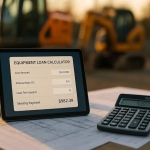
A construction equipment loan calculator is an online tool that helps business owners estimate the cost of financing construction machinery. It usually requires information such as the equipment price, down payment, interest rate, and repayment period.
After you enter these details, the calculator estimates your monthly loan payment. Depending on its features, it may also show the total repayment amount and estimated interest cost.
For example, suppose you want to purchase an excavator for $60,000. You plan to make a down payment and finance the remaining amount. A calculator can help you estimate your monthly payments based on different interest rates and repayment terms.
This information can help you plan your budget before contacting a lender. However, the result is only an estimate. Your actual loan terms may differ depending on the lender, your credit profile, and other factors.
1. Entering Incorrect Equipment Prices
One of the most common mistakes is entering the wrong equipment price. Even a small difference in the purchase price can affect the estimated monthly payment and total financing cost.
For example, if the machine costs $45,000 but you enter $40,000 into the calculator, the result will not reflect the amount you actually need to finance.
Before using a construction equipment loan calculator, confirm the equipment price with the seller. If you are comparing several machines, check the price of each option separately.
You should also consider whether the quoted price includes delivery, installation, taxes, or other charges. If these expenses are not included in the calculator, add them to your overall budget separately.
Using accurate figures will help you understand the likely cost of your equipment purchase and avoid unrealistic financial expectations.
2. Ignoring the Down Payment
A down payment is the amount you pay upfront toward the equipment purchase. The remaining balance is the amount you need to finance.
Some business owners forget to include their down payment when calculating their loan. Others enter an amount that they cannot comfortably afford to pay.
Both mistakes can create problems. If you enter the wrong down payment, your estimated loan amount and monthly payment may be inaccurate.
Before using the calculator, decide how much cash your business can reasonably contribute. A larger down payment may reduce the amount you borrow and lower your interest costs, depending on the financing terms.
However, avoid using all your available savings simply to reduce the loan amount. Your business still needs enough money for employee wages, fuel, repairs, supplies, and other operating expenses.
Choose a down payment that balances lower borrowing costs with the need to maintain healthy cash flow.
3. Using an Unrealistic Interest Rate
The interest rate is another important factor when calculating equipment loan payments. It affects how much you pay to borrow money.
A common mistake is entering an interest rate that looks attractive without checking whether it is realistic for your business. The rate you receive may depend on your credit history, business income, time in business, loan amount, and the lender's requirements.
If you enter a rate that is lower than the rate you actually qualify for, the calculator may show payments that are too low.
To avoid this problem, use an interest rate from a relevant financing estimate or test several possible rates to understand how your payments may change.
Remember that a calculator cannot guarantee loan approval or the interest rate you will receive. Always review the actual financing offer before making a final decision.
4. Choosing the Wrong Loan Term
The loan term is the length of time you have to repay the loan. It can affect both your monthly payment and the total interest you pay.
Some business owners focus only on getting the lowest possible monthly payment. They may choose a longer repayment period without considering the additional interest that could accumulate over time.
A longer term can make monthly payments more manageable, but it may increase the total financing cost. A shorter term may reduce the total interest paid, but the monthly payments will generally be higher.
Use a construction equipment loan calculator to compare different repayment periods. Review both the monthly payment and the total repayment amount rather than focusing on just one figure.
Also, consider how long the equipment is expected to remain useful. A repayment term that fits your budget and the equipment's working life can help you manage your financial responsibilities more effectively.
5. Focusing Only on Monthly Payments
Monthly payments are important, but they do not tell you the full story about a loan.
For example, one financing option may offer a payment of $900 per month, while another requires $1,100 per month. The first option may seem better at first. However, it could have a longer repayment term and a higher total cost.
When using a construction equipment loan calculator, review the total amount you may repay over the entire loan period. If the calculator does not display this information, you may need to calculate it separately or ask the lender for a repayment schedule.
You should also compare interest rates, additional fees, and repayment conditions.
Understanding the full cost will help you choose financing that suits your business instead of selecting an offer based only on its monthly payment.
6. Forgetting Additional Equipment Expenses
The cost of construction equipment includes more than the purchase price and loan payments. Heavy machinery often requires regular maintenance, fuel, insurance, transportation, and repairs.
For example, an excavator may require replacement parts and routine servicing. A dump truck may create regular fuel, tire, and maintenance expenses.
If you ignore these costs, your budget may not reflect the real amount needed to operate the equipment.
A construction equipment loan calculator usually estimates financing costs based on the details you provide. It may not include every expense related to owning or operating the machine.
Prepare a separate list of expected operating costs and include them in your business budget. This will help you understand whether you can afford both the loan payments and the equipment's daily expenses.
7. Forgetting About Loan Fees
Some financing agreements include fees that are not immediately obvious when comparing monthly payments. These may include application fees, processing charges, documentation costs, or other lender charges.
If these fees are not included in your calculator results, you could underestimate the total amount you need to pay.
Before comparing loan options, read the financing details carefully. Ask the lender whether there are any upfront charges or additional costs throughout the repayment period.
You should also check whether the agreement includes early repayment charges, late payment fees, or other conditions that could affect your financial plans.
A construction equipment loan calculator is useful for estimating payments, but it should not replace a careful review of the complete loan agreement.
8. Entering Information Without Comparing Different Options
Another mistake is using the calculator only once and accepting the first result. A single calculation may not show whether another financing option could better suit your business.
For example, you could compare two down payment amounts, several interest rates, or different repayment periods. Each calculation can show how changing one factor affects your estimated payments.
When comparing options, keep the other details consistent whenever possible. This makes it easier to understand why the results are different.
You can also compare the estimated costs of new and used equipment. A used machine may have a lower purchase price, but it could require more maintenance. A newer machine may cost more upfront but offer different operating benefits.
Consider both financing costs and the equipment's expected performance before choosing an option.
9. Ignoring Your Business Cash Flow
Even if a loan looks affordable on paper, the monthly payment may become difficult if your business income changes.
Construction businesses can experience busy and slow periods. Payments from customers may also arrive later than expected, while wages, fuel, and other expenses still need to be paid.
A construction equipment loan calculator helps you estimate the payment, but it cannot predict your future business income.
Before applying for financing, review your recent income, regular expenses, existing debts, and expected project payments. Check whether your business could manage the new loan during a slower month.
It is also wise to keep an emergency reserve for unexpected repairs or temporary cash shortages.
Planning for different financial situations can help you avoid taking on a payment that puts unnecessary pressure on your business.
10. Assuming the Calculator Guarantees Loan Approval
A calculator can estimate your possible payments, but it cannot confirm whether a lender will approve your application.
Lenders may consider your credit history, business revenue, existing debt, time in business, and ability to repay the loan. They may also review the equipment being financed and the details of the proposed agreement.
This means the results shown by a construction equipment loan calculator may differ from the final offer you receive.
Use the calculator to prepare your budget and understand possible financing costs. Then review your financial records and discuss the available terms with the lender.
Never make a major equipment purchase based only on an estimated payment. Wait until you understand the actual financing conditions and can confirm that the agreement meets your needs.
How to Use a Construction Equipment Loan Calculator Correctly
Using a calculator carefully can make your financing research more useful. Start by confirming the equipment price and deciding how much you can pay upfront.
Next, enter a realistic interest rate and repayment period. If you do not know the rate you may qualify for, test several possible rates instead of relying on one assumption.
Review the estimated monthly payment and total repayment amount, if available. Repeat the calculation with different financing terms to understand how they affect your budget.
Finally, add other expenses, such as insurance, fuel, maintenance, and fees, to your financial plan. Compare the total expected costs with your business income and current financial responsibilities.
These steps can help you make a more informed decision and reduce the risk of choosing a financing option that is difficult to manage.
How Smart Business Credit Can Help You Plan Better
Smart Business Credit recognizes that careful financial planning is important when a business needs expensive equipment. Understanding your borrowing costs before applying for financing can help you prepare for future payments and protect your working capital.
A construction equipment loan calculator is a useful starting point because it allows you to estimate monthly payments and explore different financing scenarios.
However, good planning also requires reviewing your business budget, understanding your credit position, and checking the complete financing terms. By bringing these details together, you can evaluate your options with a clearer understanding of the financial commitment involved.
The goal is to find a financing arrangement that supports your construction work while keeping your business expenses manageable.
Conclusion
A construction equipment loan calculator can help you estimate payments, compare financing options, and prepare a realistic budget for purchasing machinery. However, the results are only useful when you enter accurate information and understand what the calculations include.