
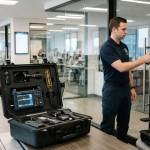






Confidential business discussions, private meetings, and sensitive corporate information can become vulnerable when unauthorized surveillance devices are present. A commercial bug sweep service helps businesses identify potential electronic eavesdropping threats through specialized Technical Surveillance Countermeasures (TSCM) inspections. Unlike pest control, a TSCM bug sweep focuses on detecting hidden microphones, covert cameras, unauthorized transmitters, and other devices that may compromise privacy.
For organizations handling confidential information, protecting meeting rooms, executive offices, boardrooms, and other sensitive areas is an important part of business security. A professional inspection can help identify suspicious devices and electronic activity before they create serious privacy, financial, or reputational consequences.
What Is a Commercial Bug Sweep Service?
A commercial bug sweep is a specialized security inspection designed to identify potential electronic surveillance devices within business premises. It is commonly associated with Technical Surveillance Countermeasures, or TSCM, which combines technical equipment, physical inspection, and investigative procedures to assess possible surveillance threats.
These inspections are particularly relevant to businesses where confidential information must remain protected. A device could be installed in a meeting room, concealed within an everyday object, or positioned to capture private conversations.
A professional TSCM inspection may focus on identifying:
-
Unauthorized wireless transmitters that could transmit conversations or other information.
-
Hidden microphones designed to capture private discussions.
-
Covert cameras placed in sensitive business areas.
-
Suspicious electronic devices connected to power supplies or communication systems.
-
Unusual radio-frequency activity that warrants further investigation.
-
Potential vulnerabilities in conference rooms and executive offices.
Not every unfamiliar electronic signal indicates surveillance. Qualified TSCM professionals assess findings in context to distinguish legitimate equipment from activity that requires additional investigation.
Why Do Businesses Need Commercial TSCM Bug Sweeps?
Businesses increasingly depend on private meetings, digital communications, and confidential negotiations. If sensitive information is exposed, the consequences may include financial losses, competitive disadvantages, damaged client relationships, and legal complications.
A TSCM inspection can form part of a broader corporate security strategy by helping organizations assess whether sensitive spaces may have been compromised.
1. Protect Confidential Meetings
Board meetings, merger discussions, contract negotiations, and strategic planning sessions may involve information that should not be disclosed to unauthorized parties. A hidden listening device could create a potential risk if it captures these conversations.
A professional sweep helps assess meeting environments for suspicious surveillance equipment and relevant electronic activity. Organizations can schedule inspections before particularly sensitive meetings or after changes to room access and security arrangements.
2. Safeguard Trade Secrets and Intellectual Property
Companies invest significant resources in product development, research, pricing strategies, and proprietary processes. Unauthorized access to this information can weaken their competitive position.
A commercial TSCM inspection may help identify surveillance-related vulnerabilities in laboratories, executive offices, research areas, and other restricted locations.
Businesses can strengthen these efforts by combining inspections with access controls, visitor management, and appropriate information-security policies.
3. Reduce Corporate Espionage Risks
Corporate espionage involves the unauthorized acquisition of confidential business information for competitive or other improper purposes. Electronic surveillance is one potential method through which sensitive information could be obtained.
TSCM professionals assess physical spaces and electronic environments for indicators of unauthorized surveillance. Although no inspection can guarantee that every threat will be detected, a properly conducted assessment can provide valuable information for risk management.
4. Maintain Client and Partner Confidentiality
Law firms, financial institutions, consulting companies, healthcare organizations, and other professional service providers may handle sensitive client information. Protecting private conversations is important for maintaining trust and meeting applicable confidentiality obligations.
Regular security assessments can help organizations identify weaknesses in rooms used for confidential consultations, negotiations, and internal discussions.
What Does a Professional Commercial Bug Sweep Include?
The exact scope of a commercial bug sweep depends on the property, the suspected threat, the organization's security requirements, and the equipment used during the assessment.
A qualified provider should explain the inspection process before work begins and clarify which areas and threat categories are included.
Physical Inspection of Sensitive Areas
A physical inspection involves examining relevant spaces and accessible objects for signs of suspicious or unauthorized equipment. Areas may include boardrooms, executive offices, conference rooms, private consultation spaces, and other locations where confidential conversations take place.
Inspectors may examine unusual modifications, unfamiliar devices, and objects that appear inconsistent with the room's normal setup. Any findings should be documented and assessed carefully rather than treated as proof of surveillance without supporting evidence.
Radio Frequency Analysis
Radio frequency (RF) analysis is used to assess wireless signals within the inspection environment. Specialized equipment can help identify signals that may warrant further examination.
However, offices contain many legitimate wireless devices, including Wi-Fi access points, Bluetooth equipment, mobile phones, and other communication systems. A signal alone does not establish that a bugging device is present.
Experienced TSCM professionals interpret readings in context, consider known sources of interference, and investigate relevant anomalies when appropriate.
Inspection of Electronic Equipment
Depending on the scope of the engagement, an inspection may include examining selected electronic equipment and relevant connections for signs of unauthorized modifications or suspicious components.
This work requires care because business premises contain complex networks of legitimate technology. Any testing should be conducted with suitable authorization and safeguards to avoid disrupting normal operations or damaging equipment.
Documentation and Recommendations
After an inspection, the provider should explain what was examined, what was identified, and whether any findings require further investigation.
A useful report may include the inspection scope, relevant observations, limitations, and recommended corrective actions. Where a suspicious device is found, handling and documentation should follow appropriate procedures to preserve evidence when necessary.
Which Business Areas Should Be Inspected?
Not every room presents the same level of risk. Inspection priorities should be based on the type of information discussed, access to the premises, the organization's threat assessment, and any specific concerns.
Common areas considered for TSCM inspections include:
-
Boardrooms: Spaces used for executive decisions, mergers, acquisitions, and corporate strategy.
-
Executive offices: Areas where confidential communications and sensitive documents are handled.
-
Conference rooms: Rooms used for negotiations, client meetings, and commercial discussions.
-
Legal and financial consultation rooms: Spaces where privileged or confidential information may be discussed.
-
Research and development areas: Locations containing proprietary designs, product concepts, or trade secrets.
-
Private offices and restricted areas: Rooms where unauthorized access could create significant security concerns.
Businesses may also consider inspections after office renovations, suspicious access incidents, unexpected changes to room equipment, or other events that justify a reassessment.
How Often Should a Business Schedule a TSCM Bug Sweep?
There is no single inspection schedule that suits every organization. Frequency should be determined by the sensitivity of business operations, the potential impact of information exposure, the premises' security history, and the organization's risk assessment.
Some businesses arrange inspections periodically, while others prioritize assessments before major negotiations, confidential meetings, or significant corporate transactions.
Additional inspections may be appropriate when:
-
Unauthorized access to a sensitive area is suspected.
-
Office renovations or maintenance work have recently taken place.
-
Unfamiliar equipment has appeared in a restricted room.
-
A security incident raises concerns about information exposure.
-
The organization is preparing for a particularly sensitive meeting or transaction.
A risk-based approach helps businesses direct security resources toward the spaces and situations where inspections may provide the greatest value.
How to Choose a Reliable Commercial Bug Sweep Service
Selecting a qualified provider is important because TSCM inspections require specialized knowledge, suitable equipment, and careful interpretation of technical findings. A provider should be able to explain its methods without making unrealistic promises about detecting every possible threat.
Before hiring a service, consider the following factors.
Relevant TSCM Experience
Ask whether the provider has experience inspecting commercial premises similar to yours. Requirements can differ between a small professional office, a corporate headquarters, a financial institution, and a research facility.
The provider should understand the operational environment and tailor the inspection to the relevant risks.
Appropriate Equipment and Methods
Ask what inspection methods are included and why they are appropriate for your situation. A professional service should explain the role and limitations of its equipment rather than suggesting that one scanner can identify every type of surveillance device.
A comprehensive assessment may require multiple methods depending on the threat being investigated.
Clear Reporting
Written findings can help management understand the inspection results and decide whether further action is necessary. Confirm whether the service includes a report, a discussion of relevant findings, and practical recommendations.
Confidentiality and Professional Conduct
The provider may encounter sensitive business information while working on-site. Confirm that appropriate confidentiality arrangements, access restrictions, and data-handling procedures are in place.
Transparent Scope and Pricing
Request a clear description of the areas to be inspected, the methods included, expected duration, and any additional costs. This makes it easier to compare providers and understand what the service will deliver.
What Can Businesses Do After a Bug Sweep?
A TSCM inspection is one element of a wider security program. If potential surveillance equipment or suspicious activity is identified, the next steps should be based on the evidence and the advice of qualified professionals.
Businesses should avoid making unsupported accusations or disturbing a suspected device unnecessarily, particularly if the matter may require formal investigation.
Recommended follow-up measures may include:
-
Documenting the findings and restricting access to the affected area where appropriate.
-
Seeking further technical investigation if the initial findings remain inconclusive.
-
Reviewing access logs, visitor procedures, and physical security controls.
-
Consulting qualified legal or security professionals if a serious incident is suspected.
-
Improving procedures for handling confidential meetings and sensitive information.
-
Scheduling follow-up assessments when justified by the organization's risk profile.
These measures can help turn inspection findings into practical improvements rather than treating the sweep as a one-time solution.
Final Thoughts
A commercial bug sweep service is a specialized TSCM security measure designed to help businesses assess the risk of hidden surveillance and unauthorized electronic monitoring. It is not a pest-control service. Instead, it focuses on protecting confidential conversations, sensitive commercial information, and private business environments through appropriate technical and physical inspection methods.
For organizations that handle valuable intellectual property, confidential negotiations, or sensitive client information, a qualified TSCM provider can support a more informed approach to security. By combining professional inspections with access controls, confidentiality procedures, and ongoing risk management, businesses can strengthen their defenses and make better decisions about protecting their most sensitive information.