




Choosing the right jewelry can be a meaningful experience, whether you are celebrating a special occasion, buying a thoughtful gift, or adding something elegant to your everyday wardrobe. Diamond necklaces for women offer a versatile combination of beauty, sophistication, and personal expression. From delicate pendants to statement pieces, the right necklace can complement different outfits and become a treasured part of a jewelry collection.
However, selecting a diamond necklace involves more than choosing a design that looks attractive. Diamond quality, necklace length, metal type, setting, and personal style should all be considered before making a purchase. Understanding these factors can help you find a piece that suits your preferences, lifestyle, and budget.
Why Diamond Necklaces Remain a Popular Jewelry Choice
Diamonds have long been associated with elegance, celebration, and lasting value. Their brilliance makes them suitable for formal occasions, while their versatility allows them to be worn with everyday clothing.
Unlike some statement accessories that work only with specific outfits, a well-chosen diamond necklace can be styled in several ways. A simple pendant may complement office attire, while a more elaborate design can enhance an evening dress.
Diamond necklaces are also frequently selected for meaningful gifts because they can represent love, appreciation, achievement, and important milestones.
Some reasons women choose diamond necklaces include:
-
Versatile styling: Diamond necklaces can be paired with casual, professional, and formal outfits.
-
Timeless appeal: Classic designs often remain fashionable beyond seasonal jewelry trends.
-
Personal significance: Necklaces can commemorate anniversaries, birthdays, graduations, and other milestones.
-
Design variety: Different diamond shapes, metals, and settings offer options for a wide range of preferences.
-
Layering opportunities: Delicate necklaces can be combined with other chains to create a personalized look.
The best choice is not necessarily the most expensive necklace. Instead, it is the piece that balances design, quality, comfort, and personal meaning.
Explore Different Styles of Diamond Necklaces for Women
Understanding popular necklace styles makes it easier to identify a design that matches your taste and intended use.
1. Solitaire Diamond Pendants
A solitaire pendant features one central diamond, allowing its brilliance to become the main attraction. This style is often chosen by women who prefer understated elegance rather than elaborate jewelry.
Solitaire necklaces work particularly well with everyday outfits, business clothing, and evening wear. They can also be layered with simple gold or white gold chains when a more contemporary appearance is desired.
When selecting a solitaire pendant, consider the diamond's shape, size, cut quality, and setting. Round diamonds are popular for their brilliance, while oval, pear, and princess-cut diamonds offer distinctive alternatives.
2. Diamond Halo Necklaces
Halo necklaces feature a central diamond surrounded by smaller diamonds. The surrounding stones create additional sparkle and can make the center diamond appear larger.
This style is suitable for women who appreciate noticeable brilliance without choosing an oversized pendant. Halo designs are often selected for anniversaries, birthdays, and special celebrations.
The arrangement of the surrounding stones should be inspected carefully. A well-crafted setting helps maintain the necklace's appearance while securing the smaller diamonds.
3. Diamond Station Necklaces
Station necklaces feature diamonds positioned at intervals along a chain. Rather than concentrating all the sparkle in one pendant, the design distributes it across the neckline.
These necklaces can be worn independently for a refined look or layered with other pieces for added dimension. Their balanced appearance makes them suitable for women who prefer modern, minimalist jewelry.
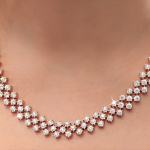
4. Diamond Tennis Necklaces
A diamond tennis necklace features a continuous line of diamonds arranged around the neckline. It creates a striking appearance and is commonly worn for formal events, celebrations, and evening occasions.
Because these necklaces contain multiple diamonds and require careful construction, their prices can vary considerably according to total carat weight, diamond quality, metal, and craftsmanship.
Before purchasing one, examine the flexibility of the design, the security of its settings, and the quality of the clasp.
5. Personalized Diamond Necklaces
Personalized necklaces may feature initials, names, meaningful symbols, or custom arrangements incorporating diamonds. They are often chosen as gifts because they combine decorative appeal with individual significance.
A personalized design can be subtle or bold, depending on the pendant size and arrangement of the stones.
When ordering a custom necklace, confirm the final dimensions, metal type, diamond specifications, and production details before approving the design.
Understand Diamond Quality Before Buying
The appearance and price of a diamond necklace are influenced by several characteristics. Learning the basics can help you compare jewelry more confidently.
The Four Cs of Diamonds
The Four Cs are cut, color, clarity, and carat weight. These characteristics are widely used to describe and evaluate diamonds.
-
Cut: Cut quality influences how effectively a diamond reflects light. A well-cut diamond can display impressive brilliance and sparkle.
-
Color: Traditional diamond color grading measures how colorless a diamond is within the applicable grading scale. Some fancy-colored diamonds are evaluated differently.
-
Clarity: Clarity describes the presence of internal characteristics, known as inclusions, and external characteristics, known as blemishes.
-
Carat weight: Carat measures a diamond's weight, not its physical dimensions or overall beauty.
For a necklace intended for frequent wear, visual appeal and secure construction should be considered alongside the diamond's specifications. A smaller diamond with excellent cut quality may appear more brilliant than a larger diamond with a less effective cut.
Natural Diamonds and Lab-Grown Diamonds
Natural and lab-grown diamonds share essentially the same fundamental chemical composition and crystal structure. Both can offer attractive options for diamond jewelry, although their origins, market prices, and resale considerations differ.
Natural diamonds form through geological processes, while lab-grown diamonds are produced using technological processes that replicate aspects of natural diamond formation.
Before purchasing, check whether the listing clearly identifies the diamond's origin. If certification is provided, review the issuing laboratory and the details documented in the report.
The right option depends on your preferences, budget, and priorities rather than on a single definition of luxury.
Choose the Right Metal for Your Necklace
The metal used in a necklace influences its color, appearance, durability, and maintenance requirements.
White Gold
White gold offers a bright, neutral appearance that pairs well with colorless diamonds. It suits contemporary jewelry designs and can complement both cool and warm clothing colors.
White gold is often rhodium-plated to enhance its bright white finish. Depending on wear and the original finish, replating may eventually be required.
Yellow Gold
Yellow gold provides a warm, traditional appearance. It creates a pleasing contrast with diamonds and works well in classic solitaire pendants, vintage-inspired designs, and personalized jewelry.
Its popularity makes it a versatile choice for women who prefer jewelry with a traditional aesthetic.
Rose Gold
Rose gold features a soft pink tone created by its gold alloy composition. It offers a distinctive alternative to white and yellow gold and can be incorporated into modern or romantic necklace designs.
When choosing a metal, consider your existing jewelry collection, skin sensitivities, care preferences, and the durability required for regular wear.
How to Select the Right Necklace Length
Necklace length affects where a pendant rests and how the piece works with different necklines.
Common options include:
-
16 inches: Often sits close to the base of the neck, depending on body proportions.
-
18 inches: Commonly rests around the collarbone and works with many everyday outfits.
-
20 inches: Usually sits slightly lower, creating a more relaxed appearance.
-
Longer chains: Can complement high necklines and provide opportunities for layering.
These positions are approximate because body shape, chain design, and pendant weight can affect how a necklace sits.
For a gift, consider measuring a necklace the recipient already wears comfortably. This can provide a more reliable guide than choosing a length based on general recommendations alone.
Match Your Diamond Necklace to the Occasion
The most suitable necklace depends partly on when and how it will be worn.
Everyday Wear
For regular use, simple pendants and lightweight designs are practical choices. They can be paired with workwear, casual shirts, dresses, and other everyday clothing.
Consider the following features:
-
A comfortable chain that does not easily tangle.
-
A secure clasp suitable for frequent wear.
-
A pendant that complements your usual clothing.
-
A setting that protects the diamond from unnecessary impacts.
Anniversaries and Romantic Gifts
Diamond necklaces are often selected for anniversaries and other meaningful occasions. Solitaire pendants, heart-inspired designs, and personalized pieces can make thoughtful gifts.
The design should reflect the recipient's preferences. Someone who enjoys minimal jewelry may appreciate a delicate pendant more than a large statement necklace.
Weddings and Formal Events
For weddings, celebrations, and evening occasions, halo pendants, diamond station necklaces, and tennis necklaces can add noticeable brilliance.
Consider the outfit's neckline and other accessories before choosing a design. If earrings or a bracelet already make a strong visual statement, a simpler necklace may create a more balanced appearance.
How to Care for Your Diamond Necklace
Proper maintenance can help preserve the appearance and condition of diamond jewelry over time. Although diamonds are exceptionally hard, they can still chip under certain impacts, and their settings may become loose.
Follow these practical care recommendations:
-
Clean gently: Use lukewarm water, mild soap, and a soft brush when appropriate for the necklace's materials.
-
Avoid harsh chemicals: Remove jewelry before using cleaning products that may damage the metal or affect other components.
-
Store it separately: Keep the necklace in a soft-lined jewelry box or individual pouch to reduce scratching and tangling.
-
Inspect the setting: Have the prongs, clasp, and other components checked periodically by a qualified jeweler.
-
Remove it during strenuous activities: Exercise, heavy lifting, and activities involving impact may expose the necklace to unnecessary damage.
-
Follow professional cleaning advice: Some designs, treatments, and gemstones require specialized care.
Ultrasonic cleaners should not automatically be used on every diamond necklace. Certain settings, treated stones, or additional gemstones may be unsuitable for ultrasonic cleaning.
With appropriate care, a well-made necklace can remain an important part of a jewelry collection for many years.
What to Consider Before Purchasing a Diamond Necklace
Before making a final decision, compare more than the displayed price. The details provided by the seller can help you understand what you are purchasing.
Use this checklist when comparing options:
-
Confirm whether the diamonds are natural or lab-grown.
-
Review the diamond specifications and any available grading documentation.
-
Check the metal type and stated purity, such as 14K or 18K gold.
-
Compare the total carat weight with the size and number of individual diamonds.
-
Examine the setting, chain construction, and clasp quality.
-
Review the seller's return policy, warranty terms, and after-sales services.
-
Ask whether resizing, repairs, or routine inspections are available.
-
Compare similar designs to understand whether the price reflects the materials and craftsmanship.
Transparent product information is an important indicator of a reliable shopping experience. Independent grading reports may help verify diamond characteristics, although not every small diamond in a multi-stone necklace will necessarily have an individual report.
A trustworthy jeweler should be able to explain the product's specifications clearly and answer reasonable questions before a purchase is completed.
Final Thought
Choosing the right diamond necklace is about finding a balance between beauty, quality, comfort, and personal meaning. Whether you prefer a simple solitaire pendant, a sparkling halo design, or an elegant tennis necklace, the right piece should reflect your individual style and fit the occasions for which you plan to wear it. When comparing diamond necklaces for women, pay attention to diamond quality, metal type, craftsmanship, and the seller's transparency rather than focusing on appearance alone. By considering these details before making a purchase, you can select a necklace that feels special today and remains a valued part of your jewelry collection for years to come.