


Gate Hinges For Heavy Gates require careful material selection when installed outdoors, where rain, humidity, temperature changes, and airborne salt can affect metal surfaces. For manufacturers, wholesalers, and project buyers, understanding the differences between carbon steel, stainless steel, and protective coatings helps match hardware specifications to actual working conditions. The right choice depends on the installation environment, structural requirements, maintenance plan, and purchasing budget.
Outdoor hardware faces different challenges depending on its location. A residential entrance in a dry inland region may experience occasional rainfall and seasonal temperature changes. A coastal property, agricultural facility, or industrial site can expose metal components to salt, mud, fertilizers, or chemical residues. These conditions influence how quickly corrosion develops and how frequently maintenance may be needed. Buyers should therefore evaluate the intended application before selecting materials based on appearance alone.
Carbon steel remains a practical option for many structural hardware applications. Its mechanical properties make it suitable for various fabrication processes, including cutting, drilling, welding, and forming. Manufacturers can also produce different dimensions and mounting configurations to match specific project drawings. However, untreated carbon steel can corrode when moisture remains on its surface. Protective treatments are therefore important for outdoor installations, especially where rainfall and humidity are common.
Galvanized steel offers another option for exterior use. A zinc coating creates a protective barrier that helps reduce corrosion under suitable conditions. The actual performance depends on coating thickness, application quality, surface preparation, and environmental exposure. Buyers should ask whether the treatment covers relevant edges, drilled areas, and welded sections. These details matter because damaged or incomplete protection can leave exposed areas vulnerable to moisture.
Stainless steel is worth considering when corrosion resistance is an important purchasing requirement. Its chromium content helps form a passive surface layer that protects the underlying metal. Different grades offer different properties, so the intended environment should guide the specification. For projects near the sea or in locations exposed to chloride contamination, buyers may need to assess whether a suitable marine grade is appropriate. Material selection should always be based on verified product specifications rather than general descriptions alone.
Surface finishes also influence outdoor performance. Powder coating provides a colored protective layer and allows manufacturers to coordinate hardware with surrounding structures. Paint systems and other treatments may offer additional protection when properly selected and applied. Nevertheless, no coating should be treated as maintenance free. Scratches, impacts, welding, and incorrect installation can damage the protective layer. A suitable inspection routine helps identify these issues before corrosion spreads across a larger area.
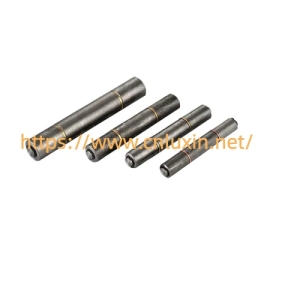
The moving components deserve attention as well. Repeated opening and closing creates friction between contacting surfaces. If moisture and dirt accumulate around the pivot, movement may gradually become less smooth. Buyers should ask about pin materials, bearing arrangements, lubrication requirements, and replacement options. A well specified assembly needs to accommodate both environmental exposure and repeated mechanical movement.
Structural compatibility is equally important. Before placing an order, purchasers should confirm the overall dimensions, mounting plate arrangement, fixing method, and required load capacity. The size and construction of the entrance panel can influence the forces acting on the mounting points. Wind exposure may also create additional loads, particularly when the panel has a large surface area. The number and position of mounting points should be determined according to the product specifications and installation conditions.
For distributors and project contractors, consistent documentation can simplify sourcing. Useful information includes material grades, coating details, dimensional drawings, load ratings, packaging specifications, and inspection procedures. When a project requires a particular finish or mounting arrangement, sharing drawings and samples with the manufacturer early in the process can help clarify technical requirements before production begins.
Maintenance should be considered during the purchasing stage rather than after installation. Periodic checks can identify loose fasteners, surface damage, unusual noise, and restricted movement. Cleaning away dirt and salt deposits may also help reduce corrosion risks in exposed locations. Lubrication should follow the product instructions, since different designs may require different maintenance methods.
Cost comparisons should include more than the initial unit price. Material selection, protective treatment, installation labor, maintenance frequency, and replacement requirements can all affect the total project cost. A specification suited to the local environment may help buyers plan maintenance more effectively and reduce avoidable service interruptions.
For residential, commercial, agricultural, and industrial applications, Luxin supports hardware sourcing with attention to product specifications, manufacturing requirements, and project compatibility. Buyers can review the available product range, compare suitable configurations, and discuss customization needs through the official product catalogue at https://www.cnluxin.net/product/ By matching material selection, surface protection, structural requirements, and maintenance expectations, purchasers can make informed decisions for outdoor installations in different environments.