
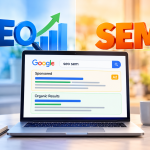

Getting noticed online is one of the biggest challenges businesses face today. Thousands of websites compete for attention, and simply having a website does not guarantee that potential customers will find it. Businesses need effective search marketing strategies to reach the right audience at the right time. Understanding seo sem can help companies build a stronger online presence by combining organic search optimization with paid advertising. Both methods serve different purposes, but when planned correctly, they can work together to increase visibility, attract qualified visitors, and support business growth.
Whether you operate a small local business, an eCommerce store, or a professional service company, search marketing helps connect your products and services with people who are actively looking for them.
Why Search Engine Visibility Matters for Modern Businesses
Search engines have become an important part of how customers discover businesses, compare services, and make purchasing decisions.
When someone needs a product or service, they often begin by searching on Google or another search engine. Businesses that appear in relevant search results have more opportunities to attract potential customers.
However, search visibility is not only about appearing on the first page. It is also about reaching people whose needs match what your business offers.
A successful search marketing strategy focuses on three important goals:
-
Attracting visitors who are interested in your services.
-
Providing helpful information that answers customer questions.
-
Encouraging visitors to take meaningful actions, such as making purchases or requesting quotes.
This is where SEO and SEM play important roles.
Understanding SEO and Its Role in Organic Growth
Search Engine Optimization, commonly called SEO, involves improving a website so that search engines can discover, understand, and display its pages in relevant organic search results.
Unlike paid advertising, SEO does not require businesses to pay search engines for every visitor who clicks an organic listing.
Instead, it focuses on website quality, relevant content, technical performance, and other factors that contribute to search visibility.
Creating Content Around Search Intent
One of the most important parts of SEO is understanding what people want when they search.
For example, someone searching for "how to choose a roofing contractor" may be researching options, while someone searching for "roof repair services near me" may be ready to hire a professional.
Businesses can create different pages to address these needs.
Informational articles help users understand a topic, while service pages explain available solutions and encourage inquiries.
Improving Website Structure
A well-organized website makes it easier for both visitors and search engines to navigate.
Clear page headings, descriptive URLs, logical internal links, and accessible navigation all contribute to a better website experience.
Technical improvements such as mobile usability, page loading performance, and proper indexing also support SEO efforts.
Building Long-Term Search Visibility
SEO generally requires consistent effort before meaningful improvements become visible.
Businesses may need to update content, resolve technical problems, improve internal linking, and earn relevant backlinks.
Although rankings are never guaranteed, effective optimization can create opportunities for sustained organic traffic.
How SEM Helps Businesses Reach Customers Faster
Search Engine Marketing is sometimes used as a broad term covering both organic and paid search. In modern marketing discussions, however, SEM commonly refers to paid search advertising.
Paid search campaigns allow businesses to display sponsored listings when users search for relevant keywords.
Platforms such as Google Ads provide tools for selecting keywords, managing budgets, creating advertisements, and tracking conversions.
Targeting Customers With Commercial Intent
Paid advertising can be particularly useful for searches that suggest someone is ready to purchase a product or hire a service.
For example, a business offering website design services could create advertisements targeting users searching for professional web designers.
Instead of showing advertisements to everyone, businesses can focus their campaigns on relevant searches and geographic locations.
Controlling Advertising Budgets
Paid search campaigns allow advertisers to manage their spending according to their marketing goals.
Businesses can set budgets, adjust bids, and review performance data to make better decisions.
However, advertising costs vary depending on industry competition, keyword demand, and other auction factors.
Measuring Campaign Performance
Another advantage of paid search advertising is the ability to measure results.
Businesses can monitor impressions, clicks, conversions, advertising costs, and customer acquisition performance.
These measurements help identify which campaigns are producing valuable outcomes and which need improvement.
SEO vs SEM: Which Strategy Produces Better Results?
Choosing between organic optimization and paid advertising depends on your business objectives.
SEO is often suitable for businesses that want to develop long-term search visibility and publish valuable content.
Paid search is useful when businesses need faster exposure, want to test new offers, or are launching time-sensitive campaigns.
|
Marketing Factor |
SEO |
SEM |
|---|---|---|
|
Primary approach |
Organic optimization |
Paid search advertising |
|
Initial visibility |
Often takes time |
Can begin after campaign launch |
|
Traffic costs |
No payment per organic click |
Advertising charges apply |
|
Main activities |
Content, technical SEO, backlinks |
Ads, bidding, targeting |
|
Long-term performance |
Can provide sustained traffic |
Depends on active campaigns |
|
Performance tracking |
Organic clicks and conversions |
Clicks, costs, and conversions |
Neither method guarantees sales or top rankings.
The strongest approach often involves selecting the right combination based on available resources and customer needs.
How SEO and SEM Work Together to Improve Business Performance
Although organic and paid search use different methods, they can complement each other.
Businesses can use paid campaigns to understand which search terms generate conversions, then apply those insights to their SEO content strategies.
Similarly, well-optimized website content can support more relevant landing pages for paid campaigns.
Improve Keyword Targeting
Paid advertising data can reveal search terms that attract visitors who are likely to convert.
SEO teams can use this information to prioritize content topics and service pages that address valuable customer needs.
Increase Opportunities for Brand Visibility
A business may appear in both organic results and sponsored listings for certain searches.
This creates additional opportunities for potential customers to discover the business.
However, having multiple listings does not automatically guarantee more clicks or conversions.
Support Different Stages of the Customer Journey
Some users begin with informational searches before moving toward commercial searches.
An SEO article may introduce a customer to a business, while a paid advertisement may help reach that customer when they are ready to compare services.
Using both approaches allows businesses to address different types of search intent.
Five Practical SEO SEM Strategies for Better Results
Improving search performance requires more than selecting keywords and launching advertisements. Businesses need a structured approach that connects marketing activities with measurable goals.
1. Focus on Relevant Keywords
Start by researching the terms customers actually use to find your products or services.
Instead of targeting keywords based only on search volume, consider their relevance, competition, and search intent.
A smaller keyword with strong buying intent may be more valuable than a broad keyword that attracts unrelated visitors.
2. Optimize Landing Pages for Conversions
Attracting traffic is only the first part of a successful marketing strategy.
Visitors should arrive on pages that clearly explain your products or services and make the next step easy.
Effective landing pages typically include clear headlines, relevant information, trustworthy business details, and visible calls to action.
3. Create Useful and Original Content
Search engines aim to provide users with relevant and helpful information.
Businesses should develop content that answers real questions, explains services accurately, and provides practical value.
Avoid repeating keywords excessively or publishing multiple pages with nearly identical information.
4. Improve Mobile Website Performance
Many customers browse websites using smartphones.
A slow or difficult-to-navigate mobile website can create a frustrating experience and discourage visitors from contacting a business.
Responsive layouts, readable text, accessible buttons, and efficient page loading are important considerations.
5. Analyze Performance Regularly
SEO and paid search campaigns require ongoing monitoring.
Review organic traffic, keyword performance, conversions, advertising expenditure, and other relevant metrics.
Use the findings to improve underperforming content, adjust advertising budgets, and refine landing pages.
Common Search Marketing Mistakes Businesses Should Avoid
Even businesses with experienced marketing teams can struggle when their strategies lack clear direction.
One common mistake is focusing on website traffic without considering whether those visitors are likely to become customers.
Another is investing heavily in paid advertising while ignoring website usability.
Poorly designed landing pages can reduce the value of advertising campaigns because visitors may leave without taking action.
Businesses should also avoid depending entirely on one traffic source.
Search rankings can change, advertising costs can fluctuate, and customer behavior can evolve.
A balanced marketing strategy makes it easier to adapt to these changes.
How Small Businesses Can Build an Affordable Search Marketing Plan
Small businesses often work with limited marketing budgets, making careful planning especially important.
The first step is identifying services or products that generate the most value.
Businesses can then prioritize a manageable group of relevant keywords and develop useful website pages around those topics.
For local businesses, optimizing business information, maintaining accurate contact details, and creating location-relevant content can help improve local search presence.
Paid campaigns can initially focus on a narrow geographic area or a small number of high-intent keywords.
As performance data becomes available, businesses can adjust their strategy based on actual results rather than assumptions.
This approach helps control costs while gradually building stronger search visibility.
The Future of SEO and SEM in Digital Marketing
Search marketing continues to change as search engines introduce new technologies and users develop different ways of finding information.
AI-powered search experiences, changing search result layouts, and improved advertising automation are influencing how businesses reach their audiences.
Despite these developments, the fundamentals of effective search marketing remain important.
Businesses still need relevant content, accessible websites, clear messaging, and a strong understanding of customer intent.
Companies that focus on providing useful experiences while monitoring changes in search technology will be better positioned to adapt their marketing strategies.
Conclusion
SEO and SEM are two important approaches to reaching customers through search engines. Organic optimization supports long-term website visibility, while paid advertising helps businesses target relevant searches and generate traffic more quickly.
Rather than treating these methods as competing strategies, businesses can use them together to create a more complete digital marketing plan.
By focusing on keyword relevance, valuable content, website performance, targeted advertising, and ongoing analysis, companies can improve their search presence and create more opportunities for sustainable business growth.