
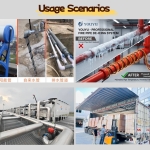

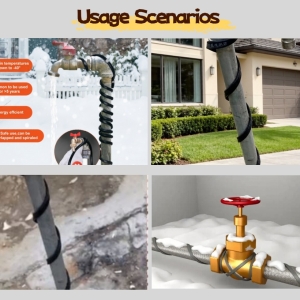



A burst pipe can flood your home and cost thousands. This complete guide to pipe heating cable explains how heat trace works, how to choose the right type, how to install it safely, and how to maintain it — with real advice from an experienced manufacturer.
【Content】 A single frozen pipe can bring a house to its knees. One cold night, water expands as it freezes, pressure builds, and a fitting or joint gives way. By morning, your basement is flooded, your drywall is ruined, and your insurance deductible is the least of your worries. The good news? Frozen pipes are almost entirely preventable with the right tool — a pipe heating cable. This guide walks you through everything you need to know: how it works, which type to choose, how to install it, and how to keep it running for years.
What Is a Pipe Heating Cable? A pipe heating cable — also known as heat tape or heat trace — is a heating element that runs along the length of a water pipe and keeps it warm enough to prevent freezing. It is typically wrapped helically around the pipe or run straight along it, then covered with insulation to trap the heat. When power is applied, the cable warms the pipe and the water inside, so even in sub-zero weather the water keeps moving or stays safely above freezing. It is the most reliable, energy-efficient way to protect pipes in unheated spaces.
Where Are Pipes Most at Risk? Not all pipes freeze equally. The highest-risk locations are:
- Attics and crawl spaces with little or no insulation.
- Basements and garages that are not heated.
- Exterior walls where plumbing is close to the cold side.
- Under-slab and exposed lines in sheds, barns, RVs and boats.
- Pipes under mobile homes and in uninsulated utility rooms.
If a pipe runs through any space that can drop below freezing, it is a candidate for freeze protection. When you inspect your property, walk the water lines and note every run that is exposed or in an unheated zone.
Self-Limiting vs. Constant Wattage: What Is the Difference? This is the most important buying decision, so let us be clear.
- Constant wattage cable delivers the same heat output along its entire length regardless of temperature. It is simple and powerful, but it must be sized precisely and is typically cut to length and terminated in the field.
- Self-limiting cable automatically varies its heat output with temperature. Where the pipe is cold, it draws more power; where it is warm, it draws less. This makes it inherently safer — it cannot overheat itself — and easier to apply, and it can be cut to length on site without complex termination.
For most residential and many industrial applications, self-limiting technology is the recommended choice because of its safety, energy efficiency and ease of installation. Choose a manufacturer that offers both series so you can match the technology to the job.
How Do You Choose the Right Pipe Heating Cable? Work through these factors:
- Pipe material and diameter: Copper, PEX and steel behave differently; diameter affects the wattage needed.
- Location and insulation: An insulated pipe in a mild climate needs less power than a bare pipe in a deep freeze.
- Length of run: Measure carefully, including fittings and valves, which lose heat faster.
- Power supply and voltage: Confirm the available voltage and the total load.
- Environmental exposure: Indoor, outdoor, and wet or corrosive locations need different jackets.
- Certifications: Look for CE, ROHS, EAC and relevant standards, and for products from a manufacturer with quality systems such as ISO9001.
A good supplier will help you size the cable honestly rather than selling you more than you need.
Step-by-Step: How to Install a Pipe Heating Cable Safely Installation is straightforward if you follow the manufacturer's instructions. Here is the general process:
- Turn off power and plan the layout. Read the datasheet for your exact product.
- Clean and dry the pipe surface so the cable sits flush.
- Lay the cable straight along the pipe, or wrap it helically at the recommended spacing for better coverage on critical joints.
- Pay extra attention to fittings, valves and elbows, which lose heat fastest.
- Secure the cable with the approved tape or clips — never use metal straps that could damage the jacket.
- Cover the cable and pipe with insulation to trap the heat; the thicker the better for efficiency.
- Connect the cable to a properly rated power supply through a ground-fault circuit interrupter (GFCI).
- Test the system before sealing everything up, and keep photos of the layout for future reference.
Safety note: never overlap a constant-wattage cable on itself, and always use GFCI protection. If in doubt, consult a licensed electrician.
Do You Need a Thermostat or Controller? You do not have to run a pipe heating cable all winter long. A thermostat or a dedicated control system can switch the heat on only when the pipe temperature drops near freezing, which saves energy and extends product life. Some self-limiting cables include a built-in thermostat; others are paired with an external one. For whole-property protection, a manufacturer that supplies electric heating control systems can integrate pipe protection with other heating zones into one coherent setup.
How Much Does It Cost to Run a Pipe Heating Cable? Operating cost depends on the wattage, the duty cycle, and how often the system actually activates. A properly sized self-limiting cable with a thermostat runs only when needed, so the real-world cost is usually modest — far less than the cost of one burst pipe and its cleanup. When you compare, remember: a frozen pipe can cost you thousands in water damage, structural repair, mold remediation and lost time. The cable pays for itself the first time it prevents that.
Maintenance and Longevity A well-installed pipe heating cable needs very little attention, but a few habits keep it healthy:
- Test the system before each cold season and check for a tripped GFCI.
- Inspect the insulation jacket for damage from rodents, tools or sunlight.
- Check that insulation is intact and not soaked, since wet insulation conducts heat away.
- Verify the thermostat and sensor are working and set correctly.
- Keep the power and documentation in a known place.
With these habits, a quality cable will protect your pipes for many winters. And the same principle that keeps pipes safe also applies to the rest of your property — the technology family is broader than you might think.
One Partner, Whole-Property Protection Here is a thought worth carrying forward: freeze protection is not a single-product job. The same weather that threatens your pipes also threatens your roof line and your walkways. A gutter heating cable keeps ice dams off your eaves and downspouts; a snow melting cable keeps driveways and steps clear and safe; and a pipe heating cable protects your water supply. These systems share the same electrical and control principles, so working with one engineering-led manufacturer makes the whole job simpler, more consistent and more reliable than juggling three unknown vendors.
Meet the Manufacturer Behind the Cable Behind every reliable heating system is a manufacturer with real depth. Anhui Youyu Electric Heating Equipment Co., Ltd was founded in 2012 and is located in the High-tech Industrial Development Zone in Wuhu, Anhui, China. It is an energy-saving, high and new technology enterprise that integrates professional research, manufacture, sale, engineering, design and construction, and it holds independent intellectual property. The company's products cover two series — self-limiting temperature and constant power — along with electric heating accessories and electric heating control systems. Operating from a construction area of more than 20,000 square meters, Youyu focuses on the development and production of electric heating series products and overall solutions, providing users with personalized and customized products and services. With user experience at the core, the company helps customers find cost-effective solutions to meet individual needs. It has obtained EAC, CE, ROHS, ATEX, ISO9001 quality system, ISO14001 environment system and OHSAS18001 occupational health management certificates, among other industry quality and explosion-proof certificates. Taking the client as the top priority, Youyu runs a strict quality control system and offers considerate after-sale service, and warmly welcomes partners from home and abroad to build long-term business relationships. For the full product range and to start a project, visit chinayouyu.com.
A Pipe That Never Bursts A frozen pipe is a preventable disaster, and a pipe heating cable is the single most effective defense you can install. Choose self-limiting technology for safety and efficiency, size it honestly, install it with care, protect it with a thermostat, and buy from a manufacturer with the certifications, engineering and service to stand behind it. Do that, and you can face the harshest winter knowing your pipes — and your peace of mind — are safe.