
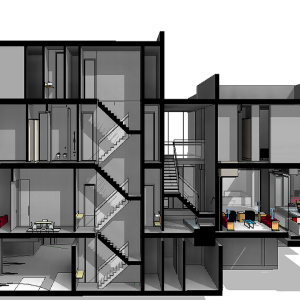


Dubai’s construction industry is known for its speed, scale, and ambition. From high rise towers and luxury hotels to industrial facilities and infrastructure projects, developments are often complex and time sensitive. In such an environment, even small errors can lead to costly delays, safety risks, and extensive rework. This is why 3D scanning Dubai has become an essential tool for reducing risk and improving accuracy across construction projects.
Traditional surveying and documentation methods often struggle to keep up with the demands of modern projects. In contrast, 3D scanning provides precise, real world data that helps project teams make informed decisions from the earliest stages through to completion. As Dubai continues to embrace digital construction practices, 3D scanning is playing a critical role in improving project outcomes.
Understanding the risks in construction projects
Construction projects naturally involve a wide range of risks. These include design errors, inaccurate site conditions, misalignment between disciplines, unforeseen obstacles, and poor coordination. In Dubai, where projects are often large and technically advanced, these risks are amplified.
Many projects involve existing structures, tight urban sites, or complex mechanical and electrical systems. Without accurate information, teams rely on assumptions that can quickly lead to mistakes. Once construction begins, correcting these mistakes becomes expensive and disruptive.
3D scanning Dubai addresses these challenges by capturing precise as built conditions and providing reliable data that reduces uncertainty.
What is 3D scanning and how it works
3D scanning is a technology that captures the physical environment using laser scanners or similar devices. These scanners record millions of data points, known as point clouds, which accurately represent the shape, size, and position of objects and spaces.
In Dubai, 3D scanning is used on construction sites, existing buildings, industrial plants, and infrastructure projects. The resulting data can be converted into detailed digital models that support design, planning, and coordination.
This high level of accuracy makes 3D scanning a powerful tool for reducing risk and minimizing rework.
Improving accuracy from the start
One of the biggest advantages of 3D scanning Dubai is the accuracy it brings to projects. Traditional measurements taken manually are prone to human error, especially in complex or hard to access areas.
3D scanning captures complete site conditions quickly and precisely. This ensures that designers and engineers work with accurate information from the beginning.
When designs are based on real conditions rather than assumptions, the likelihood of errors is significantly reduced. This early accuracy sets a strong foundation for the entire project.
Reducing design conflicts and clashes
Design conflicts between architectural, structural, and MEP systems are a common cause of rework. These clashes often go unnoticed until construction is underway.
3D scanning allows existing conditions to be integrated into digital design models. This helps designers see exactly how new elements will fit within the existing environment.
In Dubai, where renovation and retrofit projects are common, this is especially important. Accurate scan data helps teams avoid conflicts that could otherwise lead to costly modifications on site.
Supporting better coordination between teams
Construction projects involve multiple stakeholders, including architects, engineers, contractors, and clients. Clear communication and coordination are essential to avoid misunderstandings.
3D scanning Dubai supports collaboration by providing a shared and accurate reference for all teams. Instead of relying on outdated drawings, everyone works from the same digital data.
Organizations such as bin ally often support projects by integrating scan data into coordinated workflows, helping teams align their efforts and reduce the risk of miscommunication.
Minimizing surprises during construction
Unexpected site conditions are a major source of risk in construction. Hidden services, uneven surfaces, or undocumented modifications can cause delays and safety concerns.
3D scanning captures visible and measurable details of a site before construction begins. This allows teams to identify potential issues early and plan accordingly.
In Dubai’s fast paced construction environment, minimizing surprises helps keep projects on schedule and within budget.
Reducing rework through accurate as built documentation
Rework occurs when work has to be redone due to errors or changes. It wastes time, increases costs, and affects productivity.
3D scanning Dubai provides accurate as built documentation that reflects the true state of a building or site. This documentation can be used to verify installations, check tolerances, and confirm compliance with design requirements.
When teams have confidence in the accuracy of their data, the need for rework is significantly reduced.
Enhancing safety on site
Safety is a top priority on construction projects, especially in Dubai where regulations are strict and projects are often large scale.
3D scanning helps improve safety by reducing the need for manual measurements in hazardous or hard to reach areas. Scans can be taken quickly with minimal disruption to site activities.
Accurate data also supports better planning and sequencing, which helps reduce on site risks and improves overall safety performance.
Supporting renovation and retrofit projects
Renovation and retrofit projects present unique challenges because they involve working with existing structures that may not be fully documented.
3D scanning Dubai is particularly valuable in these situations. It provides a clear and accurate picture of existing conditions, allowing designers to plan modifications with confidence.
This reduces the risk of damaging existing systems and helps ensure that new work integrates smoothly with old structures.
Improving time and cost control
Time and cost overruns are common concerns in construction projects. Inaccurate information often leads to delays and budget increases.
By reducing errors, rework, and unexpected issues, 3D scanning helps projects stay on track. Accurate data supports better planning, procurement, and scheduling.
In Dubai’s competitive construction market, this improved control is a significant advantage for developers and contractors alike.
Supporting quality assurance and verification
Quality assurance requires verifying that construction work meets design and specification requirements. Traditional inspection methods can be time consuming and subjective.
3D scanning provides objective data that can be compared against design models. This allows teams to verify dimensions, alignment, and installation accuracy.
This level of verification helps maintain high quality standards and reduces the risk of defects that could require correction later.
Integrating with digital construction workflows
Dubai’s construction industry is increasingly adopting digital tools and workflows. 3D scanning fits naturally into this digital ecosystem.
Scan data can be integrated with design models, project management platforms, and coordination tools. This integration improves visibility and supports data driven decision making.
Companies like bin ally play a role in helping project teams make the most of these digital capabilities by supporting structured and efficient processes.
Building confidence for stakeholders
Construction projects involve significant investment, and stakeholders want assurance that risks are being managed effectively.
3D scanning Dubai provides transparency and confidence by offering clear, accurate, and verifiable information. Clients can see progress, understand challenges, and make informed decisions.
This transparency strengthens trust between project teams and stakeholders.
Long term value beyond construction
The benefits of 3D scanning extend beyond the construction phase. Accurate as built data is valuable for facility management, maintenance, and future renovations.
In Dubai, where buildings are often high value assets, having reliable digital records supports long term asset management and operational efficiency.
This long term value further justifies the use of 3D scanning as a risk reduction tool.
Why 3D scanning is becoming standard practice in Dubai
As Dubai continues to lead in construction innovation, 3D scanning is becoming standard practice rather than a specialized service.
Developers and consultants recognize that the cost of scanning is small compared to the potential savings from reduced rework and delays.
With experienced support from organizations such as bin ally, project teams can implement 3D scanning effectively and integrate it into their workflows.
Conclusion
How 3D Scanning Dubai Reduces Risk and Rework in Projects is evident in the way this technology improves accuracy, coordination, and confidence across all stages of construction. By capturing real world conditions and providing reliable data, 3D scanning helps teams avoid errors that lead to costly rework.
In Dubai’s demanding construction environment, reducing risk is essential for project success. 3D scanning supports safer sites, better planning, and more efficient delivery.
As digital construction continues to evolve, 3D scanning will remain a key tool for improving project outcomes. With professional implementation and support from experienced partners like bin ally, construction projects in Dubai can achieve higher quality, better control, and long term value.