
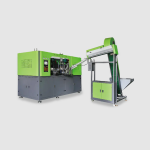


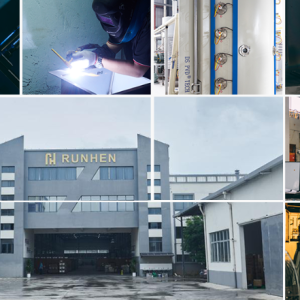
Packaging manufacturers often need to balance flexibility and consistency when selecting production equipment. In many facilities, a Wide-Mouth Bottle Blowing Machine is used alongside an Edible Oil Bottle Blowing Machine to accommodate different container structures without redesigning the entire production line. This pairing reflects practical considerations in food-grade packaging rather than a focus on isolated machine features.
Wide-mouth bottles are commonly used for products that require easy pouring, filling, or cleaning. Their larger opening simplifies downstream processes such as filling viscous liquids, inserting measuring tools, or allowing consumers to access contents without additional accessories. From a manufacturing perspective, producing these bottles requires precise control over neck forming and wall thickness distribution, which influences mold design and blowing parameters.
Edible oil bottles, while sometimes sharing similar materials, present different structural requirements. Oil containers must maintain dimensional stability during filling, storage, and transportation. Their design often prioritizes controlled pouring and resistance to deformation when stacked. An Edible Oil Bottle Blowing Machine is typically configured to support these needs through stable heating zones and consistent air pressure control during the blowing process.
The choice between wide-mouth and oil bottle formats often depends on product characteristics rather than marketing preference. Cooking oils, for example, may vary in viscosity depending on temperature, making controlled flow an important design consideration. This directly affects neck diameter, thread type, and shoulder geometry, all of which must be accurately reproduced during blowing.
Material selection also plays a central role. PET remains a common choice for both wide-mouth and edible oil bottles due to its clarity, recyclability, and compatibility with food-contact standards. However, differences in bottle geometry require adjustments in preform design. Preforms intended for wide-mouth containers often feature a larger neck finish, while oil bottle preforms emphasize uniform wall distribution to maintain shape under load.
Heating control within the blowing machine is essential for achieving these results. Infrared heating modules must evenly soften the preform without overheating localized areas. Uneven heating can lead to inconsistent wall thickness, which may affect bottle rigidity or visual appearance. Manufacturers often fine-tune heating profiles based on bottle type rather than relying on generic settings.
Mold structure further defines the final container. Wide-mouth bottle molds require accurate neck alignment to ensure sealing compatibility with lids or caps. Oil bottle molds focus on shoulder transitions and base stability, especially for larger volume containers. Both mold types must allow efficient cooling to maintain cycle stability during continuous production.
Automation integration is another shared concern. Modern blowing machines are frequently connected to filling, labeling, and packing systems. A stable output rhythm from both a Wide-Mouth Bottle Blowing Machine and an Edible Oil Bottle Blowing Machine helps prevent bottlenecks downstream. Synchronization across equipment reduces manual intervention and supports predictable production planning.
Quality inspection processes often differ slightly between bottle types. Wide-mouth containers may be checked for opening roundness and thread integrity, while oil bottles are commonly evaluated for leak resistance and vertical load performance. These inspection criteria influence how machines are configured and monitored during operation.
From an operational standpoint, flexibility matters. Facilities that produce multiple bottle formats benefit from machines designed for relatively quick mold changes and parameter adjustments. This reduces downtime and allows production schedules to respond to market demand without extensive reconfiguration.