
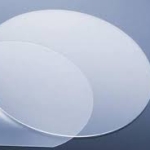


The global glass wafer carrier market is undergoing high-velocity growth, positioning itself as an indispensable element in the semiconductor fabrication and advanced packaging landscape. As the industry marches past traditional silicon constraints, micro-electronics demand extreme precision handling. Glass wafer carriers—serving as flat, ultra-stable substrate supports during wafer thinning, back-grinding, and temporary bonding processes—have become central to the production of high-performance AI accelerators, 5G chips, and advanced sensors.
The global industry was valued at US$ 551.1 Million in 2023 and is estimated to advance at an extraordinary CAGR of 19.2% from 2024 to 2031, reaching US$ 2.2 Billion by the end of 2031.
- Market Drivers: The Micro-Packaging and AI Boom
The explosive push toward a US$ 2.2 Billion valuation is driven by structural shifts in how semiconductors are manufactured and packaged:
- The Mainstreaming of Wafer-Level Packaging (WLP): To squeeze more performance out of smaller footprints, manufacturers are abandoning individual-piece packaging for advanced techniques like Fan-Out Wafer-Level Packaging (FO-WLP) and 3D IC stacking. Glass carriers provide the necessary structural baseline to process these ultra-thin, delicate silicon arrays safely.
- The Proliferation of MEMS and CMOS Sensors: The automotive industry’s heavy tilt toward autonomous safety (LiDAR, ADAS) and premium smartphone camera configurations has triggered a massive volume surge in Micro-Electro-Mechanical Systems (MEMS) and CMOS Image Sensors (CIS). These specific architectures frequently require wafer-level capping, a process heavily reliant on high-quality glass carriers.
- Thermal Expansion Matching: Advanced glass variants (like borosilicate and fused silica) feature a Coefficient of Thermal Expansion (CTE) that closely matches silicon. This crucial physical synergy minimizes mechanical stress and warpage during harsh high-temperature processing steps.
- Technological Evolution: Laser Debonding and Reusability
By 2031, the engineering criteria for glass carriers have moved past simple flatness to focus on multi-cycle process optimization.
- Laser Debonding Transparency: A primary advantage of glass over alternative carrier materials is its optical transparency. This allows for high-throughput UV or IR laser debonding processes, where a laser flashes through the glass substrate to clean release the processed, ultra-thin silicon wafer with minimal thermal or physical shock.
- Ultra-Low Total Thickness Variation (TTV): Leading material innovators are delivering glass carriers with sub-micron TTV. Ensuring absolute parallelism across the carrier surface prevents yield loss during precision chemical-mechanical planarization (CMP) and back-grinding steps.
- Circular Economy and Reusability: Unlike some sacrificial or chemical-release handling materials, high-durability glass platforms can be cleaned and reused for hundreds of cycles. This durability substantially lowers per-wafer manufacturing costs and directly supports the sustainability metrics enforced in modern mega-fabs.
- Key Market Segments: Size Trends and End Users
- Up-to-100mm Segment: Held a dominant 33.6% market share in 2023 and continues to expand at a projected 19.8% rate. This form factor remains highly popular in R&D labs, academic institutions, and specialized consumer tech components.
- Temporary vs. Permanent Carriers: While permanent subsea or interposer glass structures are expanding, Temporary Glass Wafer Carriers represent a critical bulk segment, heavily purchased by foundries and Outsourced Semiconductor Assembly and Test (OSAT) providers.
- Advanced Applications: Wafer thinning and back-grinding remain the top operational uses, followed closely by 3D packaging and lithography support.
- Regional Outlook: The East Asian Fab Hub
- Asia-Pacific (Market Leader): Dominates the global landscape due to the dense consolidation of global foundries, IDMs (Integrated Device Manufacturers), and OSATs across Taiwan, South Korea, China, and Japan. Massive regional expansions into next-gen nodes (e.g., 3nm and below) ensure APAC remains the primary revenue driver.
- North America: Marked by a high concentration of high-value R&D centers and chip-design powerhouses. Growth here is focused on custom, high-purity glass formulations for aerospace, defense, and high-performance computing (HPC) applications.
- Europe: Driven primarily by the automotive electronics sector. The regional focus is anchored on strict data compliance, premium manufacturing equipment, and providing specialized glass carriers for industrial automation sensors.
Conclusion: A Critical Cog in Smart Scaling
Reaching a US$ 2.2 Billion milestone by 2031 outlines the glass wafer carrier’s transformation from a niche handling asset to a key enabler of advanced tech progression. As the global silicon industry edges closer to physical miniaturization limits, the structural, optical, and thermal advantages of glass handling will dictate the baseline efficiency, yield volume, and commercial feasibility of tomorrow's smart devices.