
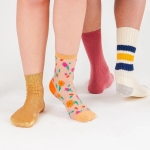


The global socks market is undergoing a structural transformation, evolving from a low-involvement, commodity hosiery item into a high-performance lifestyle, fashion, and wellness category. Propelled by the explosion of sneaker culture, the normalization of athleisure, and significant breakthroughs in fabric technology, socks are increasingly viewed as specialized technical equipment and status-driven fashion accessories.
The global socks market size was valued at US$ 56.7 Billion in 2025 and is projected to reach US$ 102.3 Billion by 2036, expanding at a CAGR of 5.5% from 2026 to 2036.
- Primary Growth Drivers: Athleisure, Wellness, and Sneaker Culture
The climb toward US$ 102.3 Billion is anchored in changing consumer lifestyles and elevated expectations for everyday apparel:
- The Athletic & Fitness Boom: Rising global participation in organized sports, marathons, and daily gym routines has turned athletic socks into essential performance gear. Consumers willingly pay premium prices for targeted cushioning, blister protection, and arch support.
- Sneaker Culture & Visual Fashion: Socks are no longer hidden garments. The rise of streetwear and sneaker culture has turned socks into a canvas for self-expression. Bold patterns, vibrant colors, and visible branding are major drivers of high-margin retail sales.
- Therapeutic and Medical Needs: A rapidly growing sub-market exists for specialized wellness hosiery. Driven by a global rise in diabetes and vascular conditions, the demand for non-binding, moisture-managing diabetic socks and graduated compression socks is expanding beyond clinical settings into mainstream retail.
- Technological Evolution: Material Science and Smart Weaves
By 2036, advanced textile engineering has elevated the performance profile of the humble sock.
- Advanced Fiber Technologies: While cotton remains the dominant volume material (holding roughly 40-49% of the market), blends featuring moisture-wicking polyesters, merino wool, and elastane are seeing rapid adoption. Performance lines now routinely integrate silver-ion or copper-infused yarns for long-lasting antimicrobial and anti-odor properties.
- Eco-Friendly and Circular Textiles: To align with global ESG mandates, prominent brands are pivoting to sustainable fibers. The market is seeing an influx of bamboo-derived rayon, organic cotton, and recycled ocean-bound plastics (like Repreve), driven by consumers who demand transparency in textile supply chains.
- On-Demand Knitting and Smart Integration: Advanced manufacturing utilizing 3D seamless knitting reduces textile waste during production. On the high-tech horizon, specialized "smart socks" integrated with micro-sensors are being deployed in professional sports and elderly care to track gait parameters, foot pressure, and real-time step analytics.
- Key Market Segments: Casual Supremacy and E-Commerce Surge
- By Product Type: Casual and Lifestyle socks continue to hold the highest market revenue share (approx. 50-54%), driven by day-to-day office and leisure wear. However, the Athletic segment is the fastest-growing vertical, expanding at a projected CAGR of over 7.4% as technical designs capture consumer attention.
- By End-User: The Men’s segment accounted for the largest revenue share in 2025 (over 53%), though the women's and children's segments are accelerating due to fast-fashion cycles and targeted lifestyle marketing.
- By Distribution Channel: While traditional brick-and-mortar stores (supermarkets, department stores) still command major volume, Online Retail and Direct-to-Consumer (DTC) subscription models are reshaping the landscape. Digitally native brands use subscription services to secure recurring revenue by delivering fresh, high-quality socks directly to consumers' doors.
- Regional Outlook: APAC Production and Western Premium Trends
- Asia-Pacific (Market Leader): Dominates the global landscape by commanding over 37% of global demand. Backed by massive manufacturing ecosystems in China, India, Bangladesh, and Pakistan, the region is simultaneously the largest production hub and its fastest-growing consumer market due to rising urban middle-class disposable incomes.
- North America: A mature market characterized by exceptionally high consumer spending on premium sportswear and technical outdoor hosiery. U.S. consumers prioritize high-performance and specialty brands (e.g., Nike, Under Armour, Darn Tough).
- Europe: A heavily fashion- and sustainability-centric market. Countries like Germany, France, and the UK are leading the transition toward organic materials and tight regulatory compliance regarding textile dyes and chemical treatments.
Conclusion: Structural Trading Up
Reaching a market size of US$ 102.3 Billion by 2036 highlights that socks have outgrown their status as a mere clothing afterthought. The market's future belongs to innovators who can merge aesthetic design with functional utility. The most successful market leaders—such as Nike, Adidas, PUMA, Hanesbrands, and Renfro Brands—will be those who leverage smart logistics and eco-certified materials to satisfy a consumer base that increasingly views foot comfort as a core pillar of holistic wellness.