



Traditional restroom layouts still separate hand washing and hand drying into two different areas. After washing their hands, users usually walk across the restroom to find a dryer or paper towel dispenser, often leaving water drops on floors and countertops along the way. In busy commercial spaces, this creates more cleaning work, unnecessary moisture, and an overall less efficient experience. This is one reason the faucet and hand dryer in one concept has gained attention in modern restroom design.
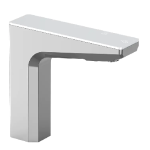
Instead of treating washing and drying as separate steps, integrated systems combine both functions directly at the sink. The main faucet handles water flow normally, while a side air outlet uses high-speed airflow to dry hands immediately after washing. Users simply move their hands sideways instead of walking across the room. The process feels more natural, especially in fast-paced environments like airports, restaurants, office buildings, and medical clinics.
One major advantage is space efficiency. Smaller restrooms often struggle with limited wall area for installing traditional hand dryers or paper towel dispensers. A compact faucet and hand dryer in one setup removes the need for extra wall-mounted equipment, which helps maintain a cleaner and less crowded appearance. Designers also appreciate the more streamlined look because it avoids mixing multiple bulky fixtures within a small space.
Hygiene expectations have also changed significantly in recent years. Many users now actively prefer touchless restroom equipment, especially in public and shared environments. Sensor-based activation reduces contact with surfaces and helps create a cleaner user experience. Because drying happens directly at the sink, users no longer need to touch another button or walk across the restroom with wet hands. This not only improves convenience but also helps reduce water drips on the floor, lowering slip risks in busy commercial settings.
Another practical reason businesses choose integrated fixtures is operating cost reduction. Paper towels create ongoing expenses involving refills, waste disposal, and additional maintenance. Even traditional electric hand dryers require separate installation and cleaning. A well-designed faucet and hand dryer in one system simplifies maintenance by reducing the number of devices inside the restroom. Janitorial staff spend less time cleaning wet areas or managing overflowing paper towel bins, which becomes especially valuable in high-traffic locations.
Noise and durability also matter in commercial environments. Modern integrated systems often use brushless motors that operate more quietly and last longer than older dryer technology. Materials such as brass or copper are preferred because they handle moisture and frequent use more effectively than lightweight plastic alternatives. In premium hospitality spaces, appearance is equally important. Hotels and upscale office buildings increasingly prefer minimalist restroom fixtures that match modern interior design instead of large wall-mounted dryers disrupting the visual layout.
Installation is usually more straightforward than many facility managers expect. In most cases, the fixture replaces a standard faucet while adding a power connection beneath the sink. Once installed, the system functions automatically through separate infrared sensors for water and airflow. Users quickly adapt because the process feels intuitive after only one or two uses.
Commercial restroom design continues evolving toward more integrated and user-friendly solutions. Businesses are no longer evaluating restroom fixtures only by purchase price. They are also considering maintenance workload, hygiene perception, water control, and overall customer experience. A properly designed faucet and hand dryer in one system addresses several of those concerns at the same time while creating a cleaner and more efficient restroom environment.