
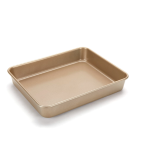


Many bakers notice different results depending on the type of bakeware used, especially when making brownies or bar desserts. A brownie tray is designed to improve portion control, baking consistency, and presentation compared to traditional baking pans.
When shopping for bakeware, it is easy to confuse a standard baking pan with a brownie tray, since both are rectangular and used for similar recipes. However, a brownie tray is specifically designed for uniform baking and clean portion cutting, making it more suitable for structured desserts like brownies, blondies, and layered bars.
The main difference lies in structure. A brownie tray typically has straight vertical sides and sharper corners, which helps produce evenly shaped squares once baked. Standard pans often have slightly rounded edges, which can lead to uneven portions or irregular slice shapes. This design difference may seem small, but it has a noticeable impact on final presentation.
Depth also plays an important role. Most brownie tray models are shallower than traditional baking pans, usually around one to two inches deep. This shallower design allows heat to reach the center more evenly, helping the brownie bake consistently from edge to middle without overcooking the top layer.
Another practical feature is portion guidance. Many brownie tray designs include subtle divider markings or guide lines on the base. These markings help bakers cut identical squares without measuring, which is especially useful for batch baking or selling homemade desserts where consistency matters.
Material quality is equally important. A good brownie tray is usually made from heavy-gauge carbon steel with reinforced edges to prevent warping during high-temperature baking. Thinner metal trays may bend slightly in the oven, which can cause uneven batter distribution and inconsistent baking results across different sections of the tray.
In real baking use, a brownie tray is often preferred when presentation and uniformity matter. It is commonly used in small bakeries, catering setups, and home kitchens preparing desserts for gatherings. The ability to lift or cut evenly sized portions makes serving faster and more visually appealing.
Proper usage also affects performance. Overfilling the tray can lead to uneven rising and dense centers, while cutting brownies too early may cause crumbling. Allowing the baked product to cool before slicing helps maintain clean edges and consistent square shapes.
Overall, a brownie tray is not just a baking container but a precision tool for achieving consistent texture and portion control. For bakers who value presentation and repeatable results, it offers a more controlled and reliable baking experience compared to standard pans.