


The rapid development of nucleic acid therapeutics, including mRNA vaccines, siRNA therapies, and CRISPR-based gene-editing approaches, has opened new possibilities across modern biotechnology. Yet designing an effective genetic payload is only part of the challenge. Delivering RNA or DNA safely into the right cells remains one of the major technical barriers in therapeutic development.
Nucleic acids are vulnerable to degradation and have difficulty crossing cellular membranes because of their size and physicochemical properties. Lipid nanoparticle formulation kits have therefore become important tools in research and preclinical development, providing a practical approach for packaging and delivering sensitive genetic payloads.
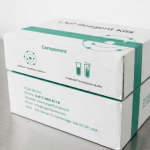
For laboratories developing new nucleic acid therapies, the formulation platform must offer more than basic reagents. Researchers increasingly require reproducible lipid compositions, controllable nanoparticle formation, and scalable processing technologies. XGen Bio combines microfluidic devices, nanomedicine preparation technologies, and LNP formulation solutions to support this evolving research landscape.
Understanding the Architecture of Lipid Nanoparticles
Modern LNPs typically rely on several lipid components that perform different functions within the nanoparticle.
Ionizable lipids are central to many nucleic acid delivery systems. They can remain relatively neutral under physiological conditions while becoming more positively charged in acidic environments, such as endosomes. This pH-responsive behavior can support interactions with nucleic acids during formulation and contribute to endosomal escape.
Helper phospholipids, such as DSPC, contribute to particle structure and membrane-like organization. They can influence nanoparticle stability and physical characteristics.
Cholesterol helps regulate lipid packing and membrane properties. Its inclusion can contribute to particle integrity and reduce undesirable leakage of encapsulated payloads.
PEG-lipids provide a hydrophilic surface layer that can influence particle stability, aggregation behavior, and interactions with biological environments.
The relative proportions of these components are critical. Rather than simply combining four ingredients, researchers must optimize lipid ratios according to the payload, administration route, target application, and desired physicochemical properties.
Why Reproducible Formulation Matters
For nucleic acid delivery research, consistency between batches is essential. Differences in lipid ratios, mixing conditions, concentration, or solvent composition can affect particle size, polydispersity, encapsulation efficiency, surface characteristics, and biological performance.
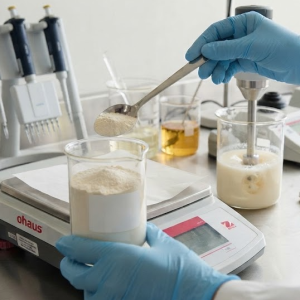
This is one reason lipid nanoparticle formulation kits are valuable during formulation development. Predefined or customizable components can simplify experimental workflows and help researchers systematically investigate formulation variables.
However, a formulation kit alone does not guarantee a specific particle size or encapsulation efficiency. Actual results depend on lipid chemistry, payload concentration, process parameters, mixer configuration, purification, and analytical methods. Therefore, formulation development should be treated as a controlled process rather than a fixed recipe.
Microfluidics for More Controlled LNP Production
As researchers move from exploratory experiments toward more reproducible processes, conventional bulk mixing can become difficult to control at small volumes and rapid mixing times.
Microfluidic platforms provide an alternative by bringing the organic lipid phase and aqueous nucleic-acid phase together within engineered microchannels. The resulting mixing environment can be controlled through parameters such as total flow rate (TFR) and flow-rate ratio (FRR).
TFR influences the hydrodynamic conditions and residence time within the mixing system, while FRR determines the relative contribution of the two incoming phases. Together with lipid concentration, solvent composition, mixer geometry, and formulation chemistry, these parameters can strongly influence nanoparticle formation.
This makes microfluidic LNP formulation particularly useful for screening different formulations and establishing relationships between process conditions and nanoparticle properties.
Supporting Different Nucleic Acid Payloads
Modern delivery research extends far beyond conventional mRNA.
Researchers are investigating LNP systems for siRNA, circRNA, plasmid DNA, gene-editing components, and other nucleic acid payloads. Each payload introduces different formulation considerations, including molecular size, charge characteristics, concentration, stability, and biological target.
Consequently, a flexible LNP formulation platform is often more useful than a system optimized for only one type of payload. Researchers may need to modify lipid composition, concentration, mixing parameters, and downstream processing as their programs evolve.
From Laboratory Screening to Process Development
One of the major challenges in biotechnology is translating a promising laboratory formulation into a reproducible development process.
A formulation that performs well in a small-scale experiment may require additional optimization when the process is changed. Differences in mixing conditions, concentration, residence time, equipment configuration, and downstream purification can all influence the final product.
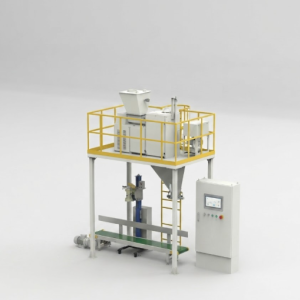
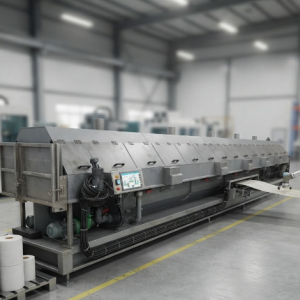
For this reason, scalability should be considered early in development. A microfluidic LNP preparation system should ideally provide sufficient control over flow parameters and process conditions to support formulation screening while establishing a pathway toward larger-scale processing.
The goal is not simply to produce nanoparticles quickly. It is to develop a process that researchers can understand, reproduce, characterize, and eventually optimize for larger-scale manufacturing.
XGen Bio: Integrating Formulation and Microfluidic Technology
XGen Bio addresses the needs of modern nanomedicine research through a combination of microfluidic devices, LNP preparation technologies, and specialized formulation solutions.
Its technology portfolio can support research involving RNA, DNA, protein-related delivery applications, and other nanoparticle-based workflows. By integrating controlled microfluidic mixing with formulation kits and screening-oriented equipment, researchers can build a more systematic development process.
This integrated approach can help laboratories reduce unnecessary formulation experiments, improve process consistency, and make more efficient use of valuable biological materials and reagents.
Building a More Reproducible Delivery Workflow
Successful LNP development requires coordination between chemistry, fluid dynamics, process engineering, and biological evaluation.
Researchers should consider lipid composition and payload characteristics together with mixing conditions, particle characterization, encapsulation performance, stability, and downstream purification. Analytical measurements should then be used to determine how process changes influence the resulting nanoparticles.
With this approach, lipid nanoparticle formulation kits become part of a broader development ecosystem rather than isolated laboratory reagents.
As nucleic acid therapeutics continue to advance, precise formulation and reproducible processing will remain essential for moving promising delivery systems from early research toward preclinical and clinical development.
Conclusion
The future of nucleic acid medicine depends not only on designing effective genetic payloads but also on delivering those payloads safely and consistently. Lipid nanoparticle formulation kits provide researchers with important tools for developing and screening LNP compositions, while microfluidic technology offers greater control over the rapid mixing processes involved in nanoparticle formation.
By combining formulation chemistry, precision fluid handling, process optimization, and scalable equipment, researchers can establish more reliable LNP development workflows.
With its focus on microfluidics and nanomedicine preparation, XGen Bio provides technologies designed to support this transition from experimental formulation to more controlled and reproducible development.
https://www.xgenbiologics.com/optimizing-workflows-with-xgen-bio-formulation-kits.html