


In modern manufacturing, packaging is no longer simply the final step of putting a product into a bag. For powders, granules, food ingredients, agricultural materials, and industrial chemicals, packaging quality can directly affect product protection, transportation efficiency, storage conditions, and production costs.
Traditional packaging methods may encounter several common problems, including inconsistent filling weights, excessive air remaining inside packages, material leakage, and dust generated during handling. These issues become even more significant when manufacturers operate high-volume production lines.
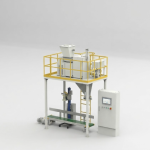
To address these challenges, Dadong Machinery has developed an advanced Vacuum Quantitative Packaging Machine, combining quantitative filling, vacuum extraction, and automated packaging operations in an integrated system. The equipment is designed to help manufacturers achieve more accurate, cleaner, and more consistent packaging results.
Why Vacuum Quantitative Packaging Is Important
During conventional filling and sealing, a certain amount of air can remain inside the package. For some products, excessive internal air can increase package volume, reduce transportation efficiency, or negatively affect storage stability.
Vacuum packaging provides a way to address this problem by extracting residual air before sealing. Depending on the material and packaging requirements, this can help create a more compact package and reduce unnecessary exposure to the surrounding environment.
For manufacturers handling powders and fine particles, vacuum technology can also contribute to better material control.
The main benefits include:
- Reduced residual air inside packages
- More compact packaging
- Improved storage and transportation efficiency
- Reduced dust dispersion
- Better control of the packaging environment
The actual preservation and shelf-life benefits depend on the characteristics of the packaged material, packaging film, vacuum level, sealing performance, and overall production process.
Accurate Quantitative Filling for Better Cost Control
Filling accuracy is another critical consideration in industrial packaging.
If the actual quantity varies significantly from package to package, manufacturers may face product giveaway, inconsistent package weights, or customer complaints. Even small differences can create substantial material losses when production volumes are high.
A vacuum quantitative packaging machine combines controlled material feeding with quantitative measurement to provide more consistent filling.
The system can coordinate several stages of the packaging process, including:
Material Feeding → Quantitative Measurement → Bag Filling → Vacuum Extraction → Sealing
By coordinating these operations through an automated control system, manufacturers can reduce unnecessary manual intervention and improve repeatability.
The resulting advantages may include more consistent package weights, lower material waste, improved production efficiency, and easier quality control.
In-Line Automation for Modern Production Lines
Packaging equipment needs to work efficiently with the rest of the factory.
For manufacturers operating automated production facilities, a standalone packaging machine may create unnecessary manual transfer points between filling, weighing, packaging, and subsequent processes.
An in-line vacuum packaging system is designed for continuous production and can be integrated with upstream and downstream equipment according to the factory's requirements.
This type of configuration can help manufacturers achieve:
- More continuous material flow
- Reduced manual handling
- Lower labor requirements
- Faster packaging cycles
- More consistent production output
- Easier integration with existing automation
For companies planning a packaging-line upgrade, it is therefore important to evaluate not only individual machine specifications but also how the equipment will communicate and operate within the complete production workflow.
Applications Across Different Industries
One of the advantages of vacuum quantitative packaging technology is its adaptability to different materials.
Food Ingredients
Flour, grains, powdered food ingredients, and other dry products can benefit from accurate filling and controlled packaging. Vacuum processing can also help reduce unnecessary air inside the finished package.
For food applications, however, manufacturers should select packaging materials and processing configurations according to the specific product, hygiene requirements, and applicable food-contact regulations.
Chemical Materials
Industrial powders and granular chemicals can generate dust during filling. An appropriately configured vacuum packaging system can help reduce material dispersion and improve the cleanliness of the working environment.
Material compatibility is particularly important in chemical applications, so the equipment should be configured according to the physical and chemical characteristics of the product.
Agricultural Products
Seeds, fertilizers, feed ingredients, and other agricultural materials often require consistent quantitative filling for transportation and distribution.
Automated weighing and filling can help improve package-to-package consistency while reducing manual handling during production.
Powder and Fine-Particle Products
Fine powders can be particularly challenging to package because they may generate airborne dust or remain suspended around the filling area.
Combining controlled quantitative filling with vacuum extraction can help reduce material dispersion and improve the overall packaging process.
What Makes a Good Vacuum Packaging System?
When selecting industrial packaging equipment, manufacturers should look beyond the basic filling capacity.
Important factors include:
- Required filling accuracy
- Material characteristics
- Target package weight
- Vacuum requirements
- Bag and packaging-film specifications
- Production speed
- Dust-control requirements
- Sealing performance
- Automation compatibility
- Cleaning and maintenance requirements
Different materials behave differently during feeding and filling. A free-flowing granular product may require a completely different feeding configuration from a fine powder.
Therefore, packaging equipment should be selected according to the actual material and production conditions rather than relying solely on standard machine specifications.
Why Work with Dadong Machinery?
Choosing an experienced packaging equipment manufacturer can make a significant difference when developing or upgrading an automated production line.
Dadong Machinery focuses on industrial packaging solutions designed around practical production requirements. Its Vacuum Quantitative Packaging Machine combines quantitative filling and vacuum processing to address two common packaging challenges: filling consistency and residual air.
The equipment can also be configured according to different material characteristics, packaging requirements, production capacities, and factory layouts.
For manufacturers, this means the machine can be considered as part of a complete packaging solution rather than simply as an isolated piece of equipment.
Conclusion
As manufacturing becomes increasingly automated, packaging equipment needs to provide more than basic filling and sealing. Accuracy, cleanliness, material control, automation, and production efficiency are becoming increasingly important factors in industrial packaging.
A Vacuum Quantitative Packaging Machine combines quantitative filling with vacuum extraction and automated packaging operations, providing a practical solution for manufacturers handling powders, granules, food ingredients, chemicals, agricultural products, and similar materials.
By reducing residual air, improving filling consistency, minimizing dust dispersion, and supporting automated production, the technology can help manufacturers improve packaging quality while optimizing production efficiency.
For companies planning to upgrade their packaging processes, Dadong Machinery provides vacuum quantitative packaging solutions that can be adapted to different materials and industrial production requirements.
https://www.wuxidadong.com/why-manufacturers-choose-vacuum-quantitative-packaging-machines.html