



Project Economics and the Importance of Storage Capacity
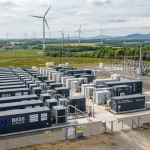
Grid-scale batteries are becoming increasingly relevant to Europe’s electricity infrastructure as renewable energy projects expand and grid operators require more flexible resources. These systems can store electricity during periods of abundant supply and return it when demand or prices increase. Understanding project capacity, duration, operating conditions, and lifecycle expenditure is essential for evaluating investment opportunities and identifying suitable applications across different national power markets.
Battery projects are commonly described using power capacity and energy capacity. Power, measured in megawatts, indicates how much electricity a system can deliver at a given moment. Energy capacity, measured in megawatt-hours, represents the quantity stored. A battery rated at 100 megawatts and 200 megawatt-hours can theoretically deliver its rated power for two hours, subject to operating limits, efficiency, and usable capacity.
The Europe Grid-Scale Battery Energy Storage (BESS) Market Size assessment should consider both installed capacity and the characteristics that determine commercial usefulness. Comparing projects only by megawatts can obscure important differences in duration, dispatch capability, and market eligibility. Investors should also distinguish announced projects, projects under construction, and commissioned installations when evaluating market development and competitive intensity.
Duration requirements vary according to the service being delivered. Frequency regulation may require rapid responses and relatively limited energy throughput, while wholesale arbitrage can benefit from additional stored energy when price differences persist across several hours. Renewable integration projects may need sufficient duration to shift generation into periods of stronger demand. Consequently, system sizing should follow a clear operating strategy rather than a generic industry benchmark.
Capital allocation depends on the relationship between power equipment and energy storage components. Inverters, transformers, grid connections, and certain engineering expenses are influenced by power capacity. Battery cells, racks, and associated equipment are more closely linked to energy capacity. Extending duration therefore changes project costs differently from increasing discharge power, creating important trade-offs for developers comparing alternative configurations.
Revenue assumptions must reflect the technical characteristics of the selected system. A battery cannot continuously discharge at full rated output beyond its available energy duration. Charging opportunities, minimum state-of-charge requirements, efficiency losses, degradation, and contractual obligations affect dispatch decisions. Financial models should incorporate these restrictions to avoid overstating market participation or projected income.
Grid connection remains a major determinant of project feasibility. Developers need to assess network capacity, connection costs, commissioning schedules, and potential restrictions on export or import. A technically suitable location may prove commercially unattractive if reinforcement requirements are extensive. Conversely, a strategically located installation may deliver additional value where local congestion or renewable curtailment creates identifiable flexibility needs.
Lifecycle planning should include augmentation, maintenance, replacement components, insurance, and eventual decommissioning. Battery performance changes over time, so the original installed capacity may not equal the energy available after years of operation. Warranty conditions, operating temperature, cycling patterns, and charging behaviour influence degradation. Developers should clarify responsibility for maintaining contracted performance and budget for foreseeable interventions.
Europe’s future storage deployment will reflect renewable expansion, electrification, network investment, and changing electricity market structures. Standardised project comparisons can help investors distinguish nominal capacity from practical commercial value. Strong proposals will connect power and energy specifications with credible revenue models, realistic operating assumptions, and appropriate risk management.
Ultimately, the most competitive installations will not necessarily be the largest. Projects designed around local system needs, suitable duration, dependable equipment, and efficient operations can provide valuable flexibility. Capacity planning grounded in transparent engineering and financial analysis will remain essential as Europe develops a more resilient and adaptable electricity infrastructure.