


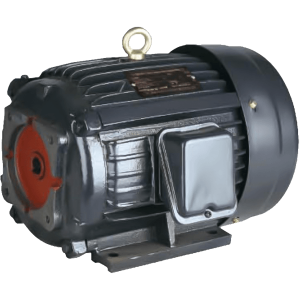
Technological evolution has significantly expanded the capabilities of high pressure plunger pumps, driven by demands for greater efficiency, longevity, and operational flexibility. Modern designs leverage computational fluid dynamics to optimize port geometries, reducing turbulence and pressure losses during fluid transitions. Improved manufacturing techniques—such as laser-hardened plunger surfaces and diamond-like carbon coatings—minimize wear in abrasive service. Variable displacement mechanisms, like adjustable swashplates in axial piston pumps, allow real-time flow modulation without bypass systems, conserving energy in applications with fluctuating demands. These innovations enable high pressure plunger pumps to achieve sustained operation at pressure levels previously considered impractical for reciprocating equipment.
Material science plays a decisive role in advancing pump performance. Researchers develop specialized alloys and ceramics that resist erosion-corrosion in challenging media, from seawater to acidic mining slurries. Elastomer formulations for seals and diaphragms now withstand broader temperature ranges and aggressive chemicals while maintaining elasticity. The integration of sensor arrays directly into pump components provides continuous data on vibration, temperature, and pressure pulsations, enabling condition-based maintenance. Some modern high pressure plunger pumps even incorporate self-diagnostic algorithms that predict seal failure or valve degradation before operational disruptions occur.
Efficiency improvements focus on reducing parasitic losses. Hydrostatic bearing designs in the power end lower friction, while optimized valve spring dynamics decrease response lag. In triplex and quintuplex configurations, phased plunger motion smoothes flow irregularities, diminishing the need for external dampeners. For mobile applications, compact designs with higher power-to-weight ratios allow deployment in offshore or remote locations. These engineering refinements collectively enhance the mean time between failures, making high pressure plunger pumps more economical over their lifecycle despite higher initial investment.
The convergence of mechanical engineering and digitalization opens new frontiers for high pressure plunger pumps. IoT-enabled units can adjust operating parameters based on real-time process feedback, while digital twins simulate performance under hypothetical conditions for preemptive optimization. As industries push toward higher precision and sustainability, these pumps continue to evolve, balancing brute force capability with intelligent control. Their ongoing development underscores a broader industrial trend: transforming traditional mechanical workhorses into smart, adaptive systems that deliver reliability where failure is not an option.